
Why buying fitness equipment is harder than it looks
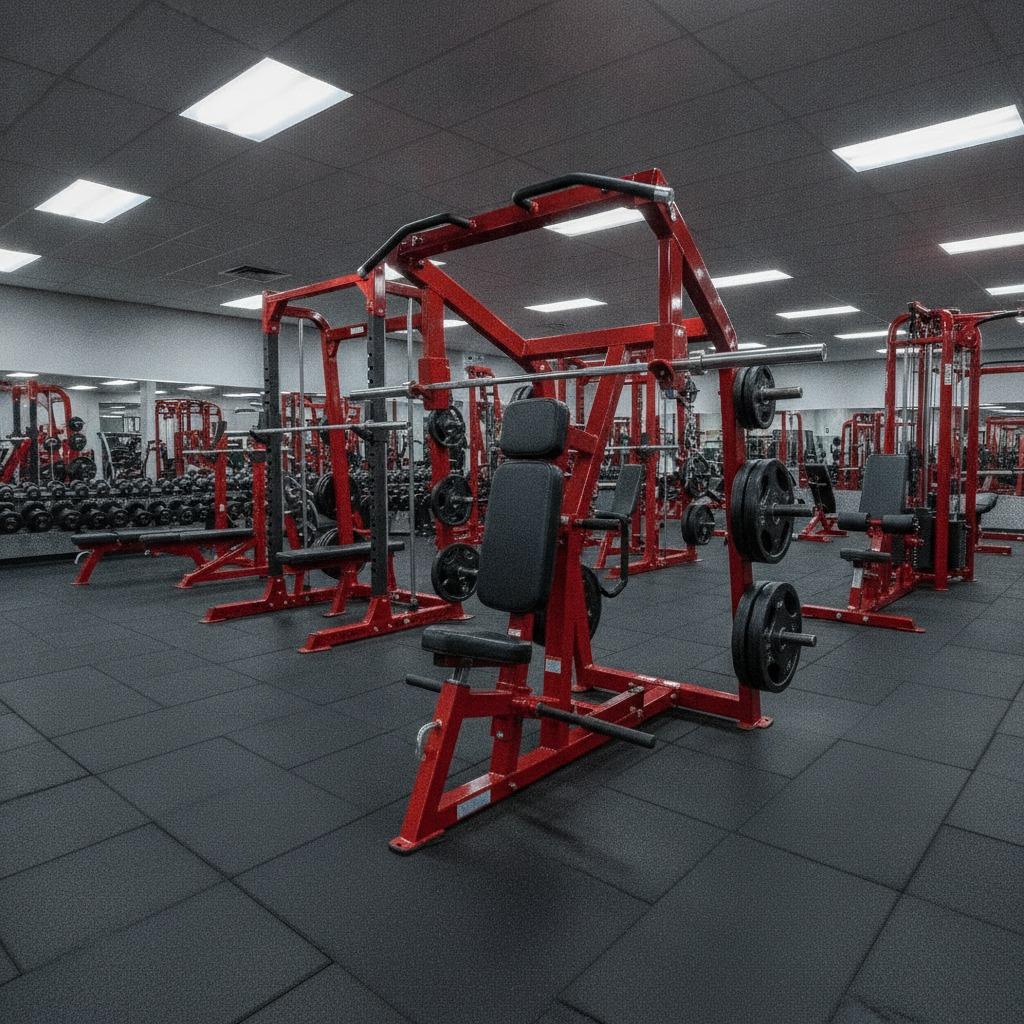
When teams shop for fitness equipment, they usually start with the headline features: footprint, price, and whether the machine looks sturdy enough to survive daily use. That is understandable, but it misses the part that tends to matter later, after the purchase order is signed and the floor plan is already fixed. The real question is whether the equipment fits the training intent, the user population, and the maintenance reality of the facility.
A plate-loaded strength machine such as a pull-over unit sits in that middle ground between simple free weights and highly automated cardio equipment. It is not as visually obvious as a treadmill, but it can become one of the more used pieces in a strength area because it offers guided movement, repeatability, and a clear training path for upper-body work. For a gym operator, rehabilitation center, or institutional buyer, that makes it worth a closer look.
What a pull-over machine actually does
The SH68 Pull Over 臂下压背肌训练器 is a seated, plate-loaded strength training machine built around a guided lever motion. Based on the visible structure, it uses a welded steel frame, side lever arms, a seat and back pad, and upper support pads to help the user stay in position while loading resistance with weight plates.
That matters because the machine is not just “another upper-body station.” In practice, a pull-over pattern can be used to work the latissimus dorsi, serratus, chest, shoulders, and upper back depending on how the movement is performed. In a commercial setting, this gives trainers and users a controlled option for back and chest-related upper-body training without needing a full barbell setup.
For buyers comparing strength training equipment, the key advantage is the guided path. It reduces the learning curve and helps keep movement more consistent from one user to the next. That is useful in shared facilities where technique varies widely. It is also one reason these machines often sit comfortably alongside cardio equipment and other exercise machines in mixed-use gyms.
Quick buyer takeaways
If you are evaluating this type of machine, a few practical points stand out quickly:
The plate-loaded format gives facilities a familiar resistance model and makes the unit easy to understand for regular gym users.
The seated, supported geometry can be easier to supervise than some free-motion lifts, especially in busy training spaces.
The welded steel frame and mechanical lever layout suggest a product designed for repeated commercial use, although the exact steel thickness and bearing system are not visible here.
The black upholstered pads and red powder-coated frame also suggest a straightforward, serviceable design rather than a decorative one. In many facilities, that is a better trade-off than flashy styling.
Where this machine fits in a facility
This type of machine is best thought of as a strength-station investment rather than a general-purpose fitness tool. It belongs in a commercial gym, fitness center, strength-training area, conditioning facility, or institutional fitness room where users expect controlled resistance work.
It is less of a centerpiece than a treadmill or an all-in-one multi-station tower, but that is not a weakness. Facilities often need a balanced mix of cardio equipment and strength stations, and the machines that look less dramatic are often the ones members keep returning to.
Useful when you want repeatable movement
A pull-over machine can be especially helpful when user consistency matters. New users do not always know how to manage a pullover pattern with free weights, and a guided lever reduces some of that uncertainty. That can make it a practical choice for supervised environments or for facilities that serve mixed experience levels.
What to check before placing an order
Buyers should not rely on the image alone. Several details that affect performance are not visible and should be confirmed with the supplier before purchase:
Adjustment range for the seat, pads, and starting position
Actual dimensions and floor clearance
Weight-plate loading compatibility
Frame stability and total machine weight
Resistance feel across the motion path
Service access for pivot points, upholstery, and hardware
Those are not small issues. A machine can look solid but still be awkward to fit into a crowded floor plan or inconvenient for staff to maintain. That is the sort of problem that shows up after delivery, which is exactly when nobody wants it.
Common buying mistakes
One common mistake is treating all strength machines as interchangeable. They are not. A pull-over unit serves a specific movement pattern, so it should be selected because it fills a training gap, not because the frame color matches the rest of the room.
Another mistake is overestimating how much adjustment is actually available. The product information suggests adjustable-looking support components, but exact adjustment positions are not visible here. Buyers should verify that the setup works for the intended user range before committing.
A final caution: do not assume a commercial-looking frame automatically means maintenance-free ownership. Welds, pivot points, padding, and finish all need routine inspection, especially in high-traffic gyms.
How to evaluate value, not just appearance
For sourcing managers, value comes down to three things: durability, usability, and fit. The red powder-coated steel frame and chrome-finished load posts indicate a design aimed at long-term use. The open mechanical layout makes it easier to inspect visually, which can help in busy facilities where staff need to spot wear early.
For trainers, the value is in the motion itself. Guided resistance work can support progressive strength programming without demanding perfect coordination from every user. That makes the machine useful in commercial and institutional settings where the population is diverse.
For product teams, the lesson is simple: equipment that solves one movement well often outlasts more complicated machines in daily use. Not because it is trendy, but because it is easy to understand and harder to misuse.
FAQ: common questions buyers ask
Is this a cardio machine?
No. This is strength training equipment. It is designed for resistance work, not aerobic conditioning.
Can it be used in a small gym?
Possibly, but only if the floor plan allows for the machine’s footprint and user clearance. Confirm dimensions before purchase.
Does it replace free weights?
No. It complements free weights. The machine offers guided resistance, while free weights still provide versatility and broader programming options.
Is the resistance unilateral or bilateral?
The visible dual-arm layout suggests a side-to-side mechanical design, but the exact training protocol and intended use should be confirmed with the supplier.
Next step for buyers
If you are comparing fitness equipment for a commercial or institutional space, start with the training goal and work backward. For this pull-over machine, ask for the missing specifications, check the floor plan, and verify how the movement fits your member base or client program. A clear product fit matters more than a polished brochure, and in this category that difference usually shows up within the first month of use.