
Why a multi-station gym machine still matters in commercial fitness spaces
In the world of fitness equipment, floor space is always the pressure point. Operators want more training options, members want equipment that feels serious, and facility managers want machines that are sturdy, easy to service, and versatile enough to justify the footprint. That is where a multi-station commercial gym machine earns its keep. Instead of buying separate pieces for pull-ups, dips, knee raises, and assisted upper-body work, one vertical station can cover several functions in a compact layout.
For buyers, the real question is not whether the machine looks impressive on the showroom floor. It is whether it solves a practical problem: can it reduce congestion, support a range of users, and hold up in a commercial setting without becoming a maintenance headache? This is especially relevant for hotels, rehabilitation areas, institutional fitness rooms, and smaller training clubs that need broad utility without filling every corner with separate frames.
What this type of machine is built to do
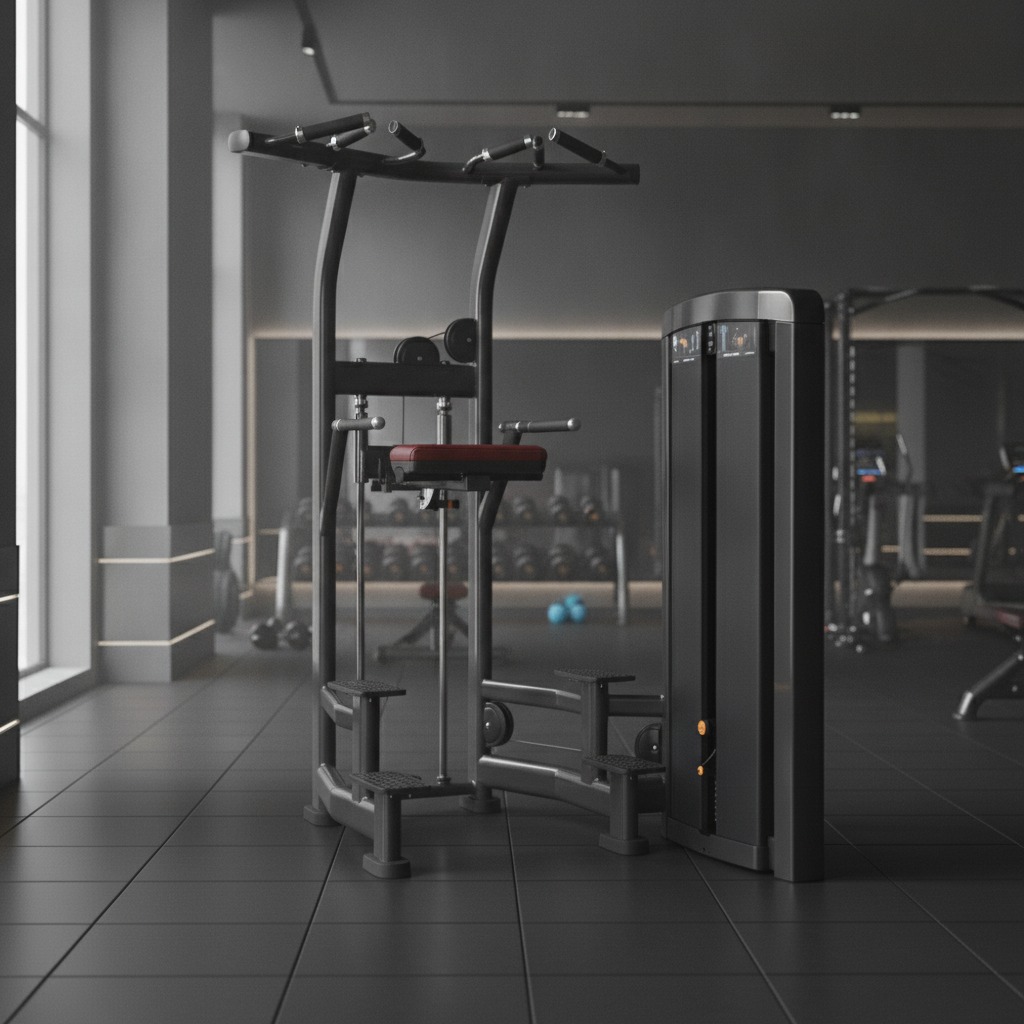
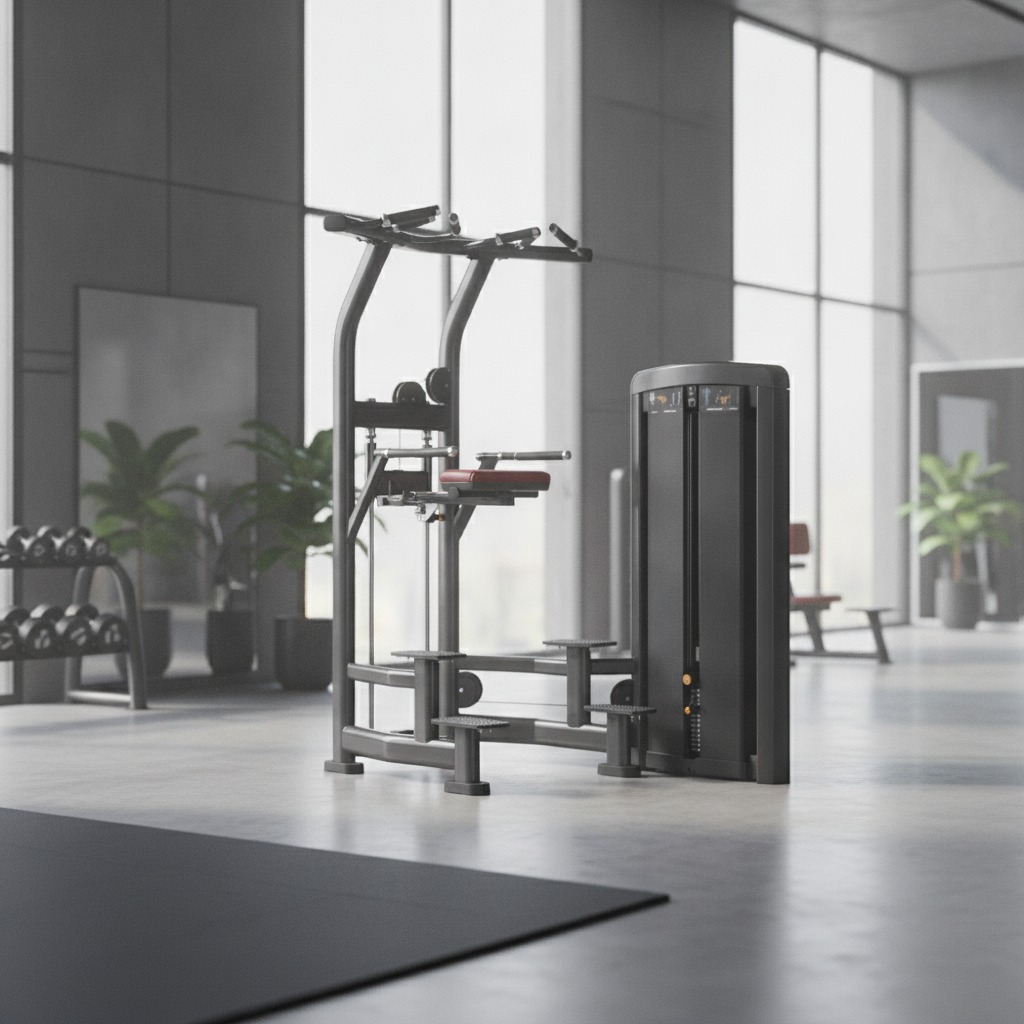
The product described here appears to be a vertical knee raise, dip, and pull-up combination station with an attached selectorized weight stack. That gives it a wider role than a simple bodyweight frame. In practical terms, it can support exercises such as pull-ups or chin-ups, dips, vertical knee raises, and possibly other upper-body or core movements depending on the exact geometry of the handles and support pads.
The visible construction points to welded steel fabrication, a black powder-coated frame, red upholstered padding, textured foot platforms, and a cable-and-pulley system linked to an enclosed weight stack. Those are familiar building blocks in commercial gym equipment manufacturing. Nothing exotic there, but the details matter. A tall frame with overhead handles and a stable base needs clean welds, consistent alignment, and enough rigidity that the station does not flex badly under dynamic use.
Key benefits buyers usually care about
A unit like this appeals to operators because it combines several training modes in one footprint. That makes it a sensible fit where space is limited, but training variety still matters. It can also help facilities manage user flow. One machine that serves multiple exercise patterns is often easier to place than three separate stations competing for the same aisle space.
The integrated weight stack is another practical advantage. Depending on the machine’s design, it may provide assistance or resistance for certain movements, which can make the station more approachable for beginners or rehab-oriented users. That said, buyers should be careful not to assume every selectorized station functions the same way. The exact motion path, resistance feel, and usability depend on the cable routing, lever geometry, and adjustment features, none of which should be guessed from appearance alone.
Material and build considerations that matter in procurement
For sourcing teams, the frame finish and component mix tell part of the story. Powder-coated steel is standard for commercial gym equipment because it offers a practical balance of appearance and corrosion resistance. Upholstered pads should be evaluated for seam quality, support consistency, and how well they tolerate repeated cleaning. In shared-use environments, that last point matters more than buyers sometimes admit.
The visible guide rods and selector-pin stack enclosure suggest a conventional weight-stack system. That is usually serviceable and familiar to maintenance staff, which can be a plus. But enclosed systems also bring ordinary wear points: cables, pulleys, guide surfaces, and selector pin hardware. If a facility expects heavy daily traffic, it is worth confirming how easy those parts are to inspect and replace.
Where this machine fits best
This type of strength training equipment is usually most useful in:
commercial gyms with limited floor area,
hotel gyms that need a compact but credible strength offering,
rehabilitation or functional training rooms,
institutional fitness rooms where equipment must serve many users.
It is less compelling if a facility already has dedicated pull-up rigs, dip stations, and assisted chin-up equipment. In that case, duplication can waste space. The buyer should decide whether the goal is consolidation or specialization.
Common buying mistakes to avoid
One common mistake is judging a machine only by its exercise list. A longer list does not always mean better usability. If the handles are awkward, the step platforms are cramped, or the padding interferes with movement, the machine will see less real use than expected.
Another mistake is overlooking service access. Selectorized machines are friendly when new, but cable wear and stack alignment are real operational issues. Ask how the stack is enclosed, how maintenance is performed, and whether replacement parts are straightforward to source. A compact machine that is difficult to repair becomes expensive in a hurry.
Also, do not assume a vertical station is suitable for every user population. Taller users, heavier users, or facilities with accessibility goals may need to verify how the machine accommodates different body sizes and movement ranges.
Quick buyer checklist
Before specifying a machine like this, procurement and fitness managers should confirm the intended exercise mix, footprint, and floor loading needs with the supplier. Ask whether the station is designed primarily for bodyweight work, assisted movement, or a combination. Review the build quality of the frame, upholstery, pulleys, and foot contact points. Then check how the machine will be installed, anchored if needed, and maintained over time.
If the goal is to buy strength training equipment that gives a facility multiple training options without consuming a large area, this kind of combination station is worth a close look. For the right location, it can do the job of several pieces of cardio equipment and weight training equipment-adjacent accessories in a much tighter footprint, while still feeling like a serious commercial unit.
What to ask the supplier next
Request the exact model documentation, exercise functions, dimensions, weight stack specification, and service instructions. If the supplier can provide assembly drawings or maintenance guidance, even better. Those documents often tell you more than a polished product photo ever will.
If you are comparing options for a new facility or an equipment refresh, start with how many users the station can realistically serve per day, not just how many exercises it claims to offer. That is the metric that usually separates a smart purchase from a pretty one.