
Why a row machine still matters on a busy gym floor
When buyers review fitness equipment for a commercial gym, a row machine can look unglamorous beside treadmills or big press stations. That is a mistake. A dedicated rowing station earns its space because it gives users a controlled pulling path, back support, and a familiar setup for upper-body work without turning the floor into a free-weight corner. For operators, that usually means less coaching time, less clutter, and a machine members can use confidently on their own.
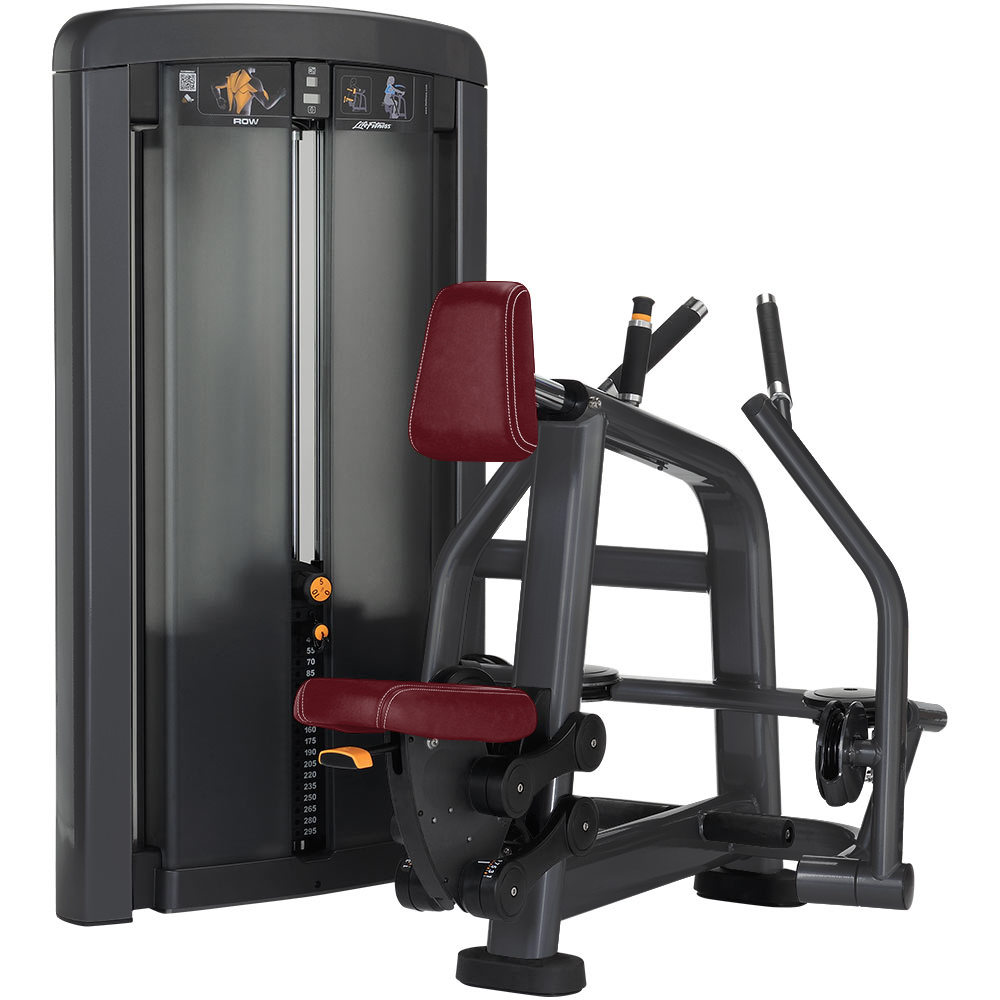
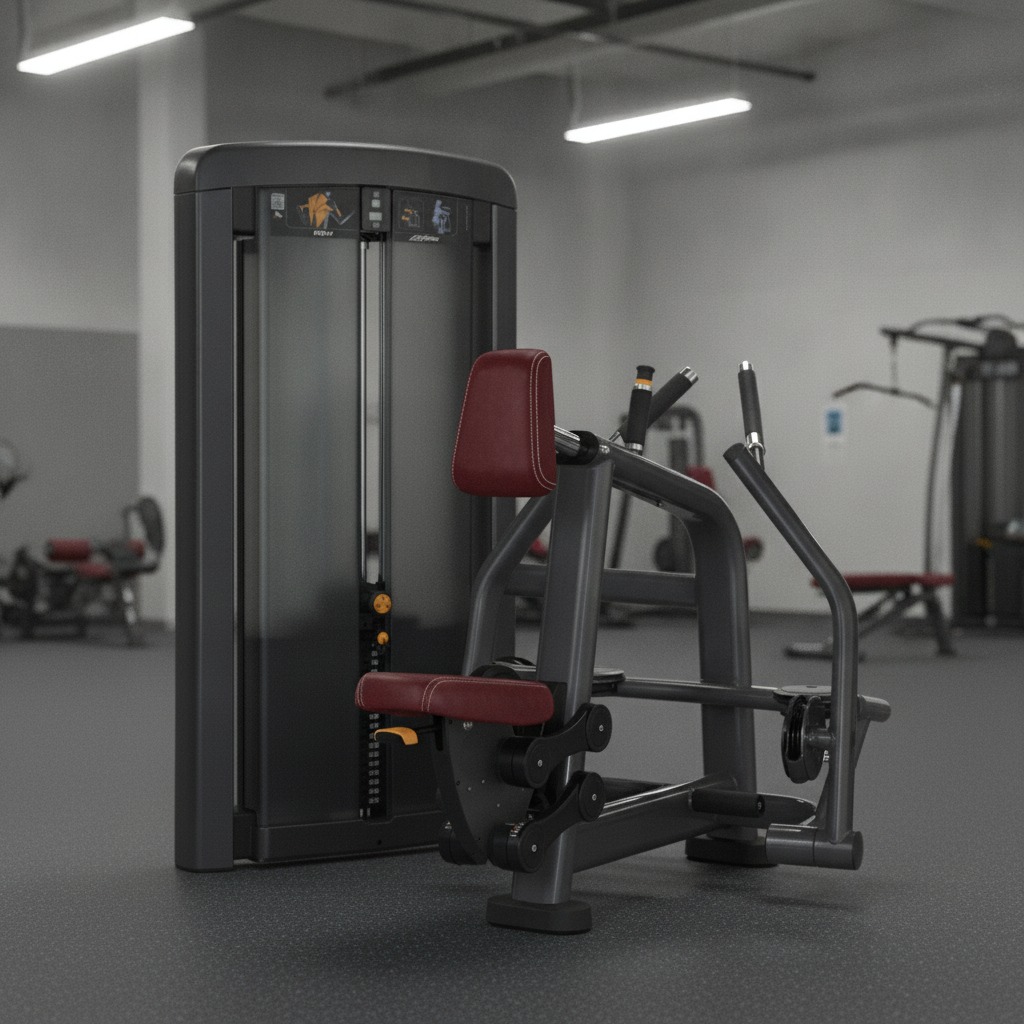
The unit described here appears to be a seated row design with a visible “ROW” head panel, a padded seat and chest support, and a compact floor-standing frame. That combination points to one of the more practical pieces of strength training equipment in a commercial setting: simple enough for general members, useful enough for more serious lifters, and stable enough for regular traffic.
What this type of machine is built to do
A seated row machine is designed to train pulling mechanics. In plain terms, it helps users work the back, rear shoulders, and arms through a guided motion. The support pads matter here. A chest pad reduces body sway, which helps keep the movement focused and also lowers the chance that a novice turns the exercise into a half-standing tug-of-war.
The visible weight stack tower suggests adjustable resistance through a selector system, though the exact mechanism is not something you should assume from the image alone. For buyers, that distinction matters. A stack-based unit generally fits a commercial environment well because it makes load changes quick and easy for different users. If the machine is cable-driven or lever-driven, the feel and maintenance profile can differ, so it is worth confirming before purchase.
Key construction details buyers should notice
The frame appears to be welded steel with a dark powder-coated finish. That is a standard but sensible choice for gym use because it holds up better than bare metal and tends to look cleaner longer. The upholstery uses a maroon or red padded seat and chest support, stitched for daily wear. Nothing flashy there, but in a gym, durable padding often matters more than visual polish.
A few practical details stand out:
The compact footprint makes it easier to place in a dedicated strength area.
The guided motion can be easier for beginners than free-row variations.
The seat and torso support should help users maintain position during heavier sets.
The selector pin area, if accessible and clearly labeled, can reduce confusion during busy periods.
None of that is exotic. It is exactly why operators buy this category: predictable use, manageable maintenance, and a clear training purpose.
How to compare it with other fitness equipment
If you are sorting equipment for a facility, compare the row machine against two common alternatives: free weights and multi-station cable systems. Free weights offer more variation and can suit advanced training, but they require more instruction and more user control. Multi-station cable systems are versatile, yet they can become crowded and may not provide the same fixed-path support.
A dedicated row station sits in the middle. It does one job well. That is not a weakness if your floor plan serves hotels, apartment gyms, rehab clinics, or mid-sized fitness centers where ease of use matters as much as training variety.
Where it tends to fit best
Commercial gyms that need dependable back-training stations
Hotel gyms where guests want a clear, low-learning-curve machine
Rehab or physio facilities that value guided movement and torso support
Strength training zones that need a stable pull movement without adding more loose hardware
Selection criteria that save headaches later
The first question is not brand name. It is whether the machine suits your users and your floor plan. Check entry and exit clearance, seat height, handle position, and how easy it is to service the stack or moving linkage. Those small details decide whether a machine feels intuitive or awkward.
Also look closely at upholstery quality, frame welds, and the quality of the decals and instructions. Instructional labels seem minor until a machine is placed in a mixed-use facility, where not every user has trained before. Clear labels reduce misuse, and misuse shortens machine life.
One practical caution: if a row machine has a compact footprint, do not assume it is lightweight or easy to move. Commercial units can be deceptively heavy and usually belong on a planned layout, not a temporary spot near a wall.
Common buyer mistakes
The most common mistake is buying for appearance rather than training purpose. A machine can look robust and still be uncomfortable or poorly arranged for the user’s motion path. The second mistake is ignoring maintenance access. A selectorized or linked machine may be straightforward to operate but less convenient to service if the stack housing and connection points are cramped.
Another issue is overestimating versatility. A row machine is not a catch-all. It is for pulling work. That specificity is a strength, but only if you actually need that movement in your training mix.
What this product category suggests about manufacturing
From a fabrication standpoint, this kind of machine usually involves steel tube welding, powder coating, upholstery assembly, and mechanical integration of cables, pulleys, or lever arms depending on the design. The visible construction suggests a commercial-grade approach rather than a light-duty home unit. That does not tell you everything about durability, of course, but it does point to the sort of build process buyers expect in professional environments.
FAQ for sourcing teams
Is this suitable for a commercial gym?
Yes, based on the visible design and support features, it appears aligned with commercial use.
Can I assume it is cable-driven?
No. The exact resistance mechanism is not confirmed, so verify that before specifying or ordering.
Does it replace other back-training equipment?
Not really. It complements pulldown stations, free weights, and other cardio equipment or conditioning zones by covering a different movement pattern.
Next step for buyers
If you are building a strength area or refreshing a commercial floor, use this kind of row machine as one of the anchor pieces in your pulling lineup. Ask for the mechanism details, maintenance requirements, and footprint before you commit. That small amount of due diligence is usually the difference between a machine that gets used every day and one that becomes expensive floor decor.