
Choosing fitness equipment for strength spaces: what matters before you buy
When buyers compare fitness equipment for a commercial gym, training studio, or serious home setup, the real question is usually not “what looks impressive?” It is whether the machine will hold up to daily use, suit the training style of the room, and keep the floor organized enough that people actually use it. A plate-loaded squat/press station sits right at that intersection. It is a piece of equipment that can serve lower-body work, pressing movements, lunges, and rack pulls, while also giving the operator a built-in place to store plates. That combination sounds simple, but in practice it affects traffic flow, coaching, and safety.
For sourcing teams and facility managers, this kind of station is often chosen because it reduces clutter and concentrates a lot of function into one footprint. For trainers, it is appealing because the guided or fixed-bar setup can make lifting more approachable for new users while still supporting hard strength work. The catch is that not every machine in this category is the same, and a purchase decision should start with structure, not with branding.
What the machine is designed to do
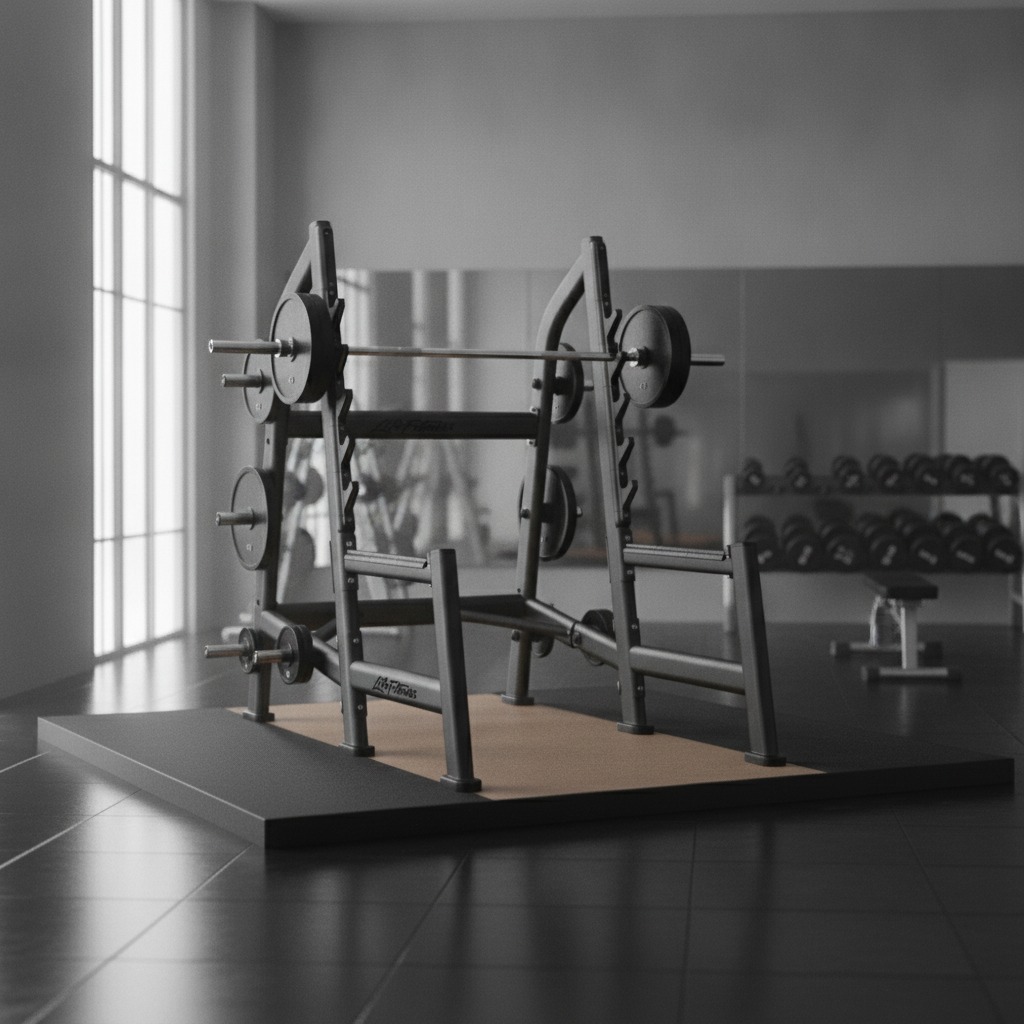
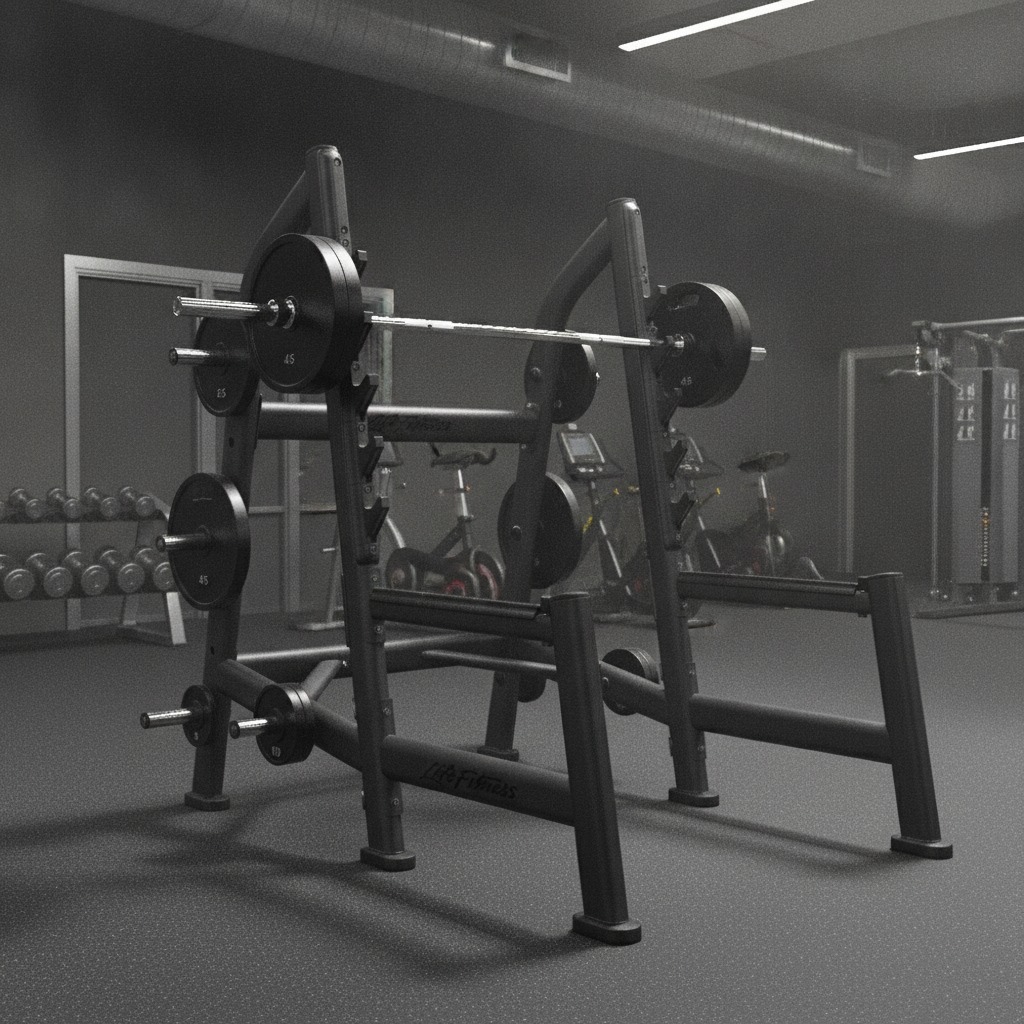
The product profile here points to a commercial strength-training machine with a heavy steel frame, a chrome or silver steel barbell, and side-mounted plate storage pegs. The visible layout suggests a squat/press rack or Smith-style guided bar station with multiple hook or catch positions on the uprights. That means the user can work from different start heights and move through exercises that need a stable bar path or a repeatable rack position.
In practical terms, that makes it useful for squats, presses, lunges, and certain pulling movements. The wide base and rubberized feet or end caps are also worth noting. On a busy gym floor, that sort of grounding detail matters more than it looks on a spec sheet. A machine can be heavy enough on paper and still feel awkward if the base is narrow or the floor contact is poor.
Quick comparison: what buyers usually care about
Space use
A freestanding, plate-loaded station can replace several separate pieces of fitness equipment, especially if plate storage is integrated into the frame. That helps with floor planning and can reduce the need for separate storage trees.
Training style
For facilities focused on strength training, this type of machine bridges the gap between free weights and guided lifting. It is not the same as a traditional barbell cage, and it is not a substitute for every free-weight movement, but it does give users a repeatable setup.
Durability
The visible heavy-gauge steel frame and powder-coated finish suggest a commercial build intended for repeated use. Welded and bolted steel fabrication is common in this category because it balances rigidity with assembly practicality.
Why the construction details matter
Buyers sometimes focus on the exercise list and overlook the frame geometry. That is a mistake. A two-upright layout with cross braces, angled support members, and symmetrical left-right construction is not just about appearance; it is what helps the station resist flex and stay aligned under load. The round plate-storage pegs on both sides also do more than hold weights. They keep standard Olympic plates close to the machine, which reduces walking back and forth and encourages users to re-rack equipment properly.
The matte black powder coat is another practical detail. In commercial settings, finish quality affects how quickly a machine starts to look tired. Scuffs are normal, especially around bar contact points and storage areas, but a sound coating helps the frame age in a more controlled way. Small things like this can influence how a facility feels after six months of use, which is often when the purchasing team gets the first honest feedback.
Selection criteria for sourcing managers
If you are evaluating this kind of product, start with the questions that affect ownership more than marketing copy does.
First, confirm the intended user level. A guided bar station may be ideal for commercial gyms, athletic conditioning areas, and strength studios where coaching support is available. It may also fit a home gym, but only if the room can accommodate the footprint and the user understands the fixed movement pattern.
Second, check compatibility with standard round weight plates. The visible plate horns suggest that standard Olympic plates are the intended match, but it is still smart to verify shaft diameter and storage spacing before purchase.
Third, ask about installation and assembly. Commercial gym equipment built from welded and bolted steel fabrication often arrives in components, and the final stability depends on correct assembly as much as on the raw material.
Fourth, confirm service access. Moving parts, hooks, catches, and bar contact points will eventually need inspection. A machine that is easy to inspect is usually easier to keep in service.
Common buyer mistakes
One common mistake is assuming all plate-loaded stations are interchangeable. They are not. The bar path, catch positions, and storage layout can change how the machine feels under load and how safely it can be coached on a crowded floor.
Another is underestimating how much organized storage improves usage. A piece of fitness equipment with integrated plate storage is often more valuable operationally than a similar machine without it, even if the lifting function looks nearly identical at first glance.
A third mistake is treating a commercial-looking frame as automatically suitable for every environment. Heavy-gauge steel is reassuring, but it does not remove the need to think about ceiling height, user flow, floor condition, and the training population.
Practical advice for end users and gym operators
If the goal is to support a broad mix of strength training without cluttering the room, this type of station is a sensible candidate. It gives you one machine that can anchor a lower-body zone and still serve pressing work. For operators, the plate storage is a real advantage because it keeps the area visually tidy and reduces loose equipment on the floor.
That said, a fixed or guided bar station should be placed where users have enough clearance to load plates and move safely around the frame. It should not be wedged into a tight corner just because the footprint looks compact in a catalog image.
What to ask before placing the order
Before buying, ask for the exact product name or model number, load-related documentation, assembly requirements, and confirmation of what is included. In this case, the visible product appears to be associated with Life Fitness, but the specific model is not identified, so it would be unwise to assume details such as capacity, dimensions, or whether the bar and plates are included.
That may sound cautious, but it is the right kind of caution. In commercial purchasing, the expensive mistake is rarely the machine itself. It is the assumption that the machine will behave exactly like the one in the photo.
Where this category fits in a broader equipment plan
Facilities planning a full strength area often build around three buckets: free weights, weight training equipment with guided or semi-guided movement, and cardio machines. This station belongs squarely in the second bucket. It complements barbells, dumbbells, and benches instead of replacing them. For many rooms, that balance is the point. Users get variety, coaches get control, and the floor stays more usable than it would with a collection of scattered attachments and loose plates.
Next step
If you are sourcing this type of machine, request the model details, a dimensional drawing, and a full accessory list before comparing prices. Once those basics are clear, it becomes much easier to judge whether the station fits your training program, your floor plan, and the rest of your fitness equipment mix.