
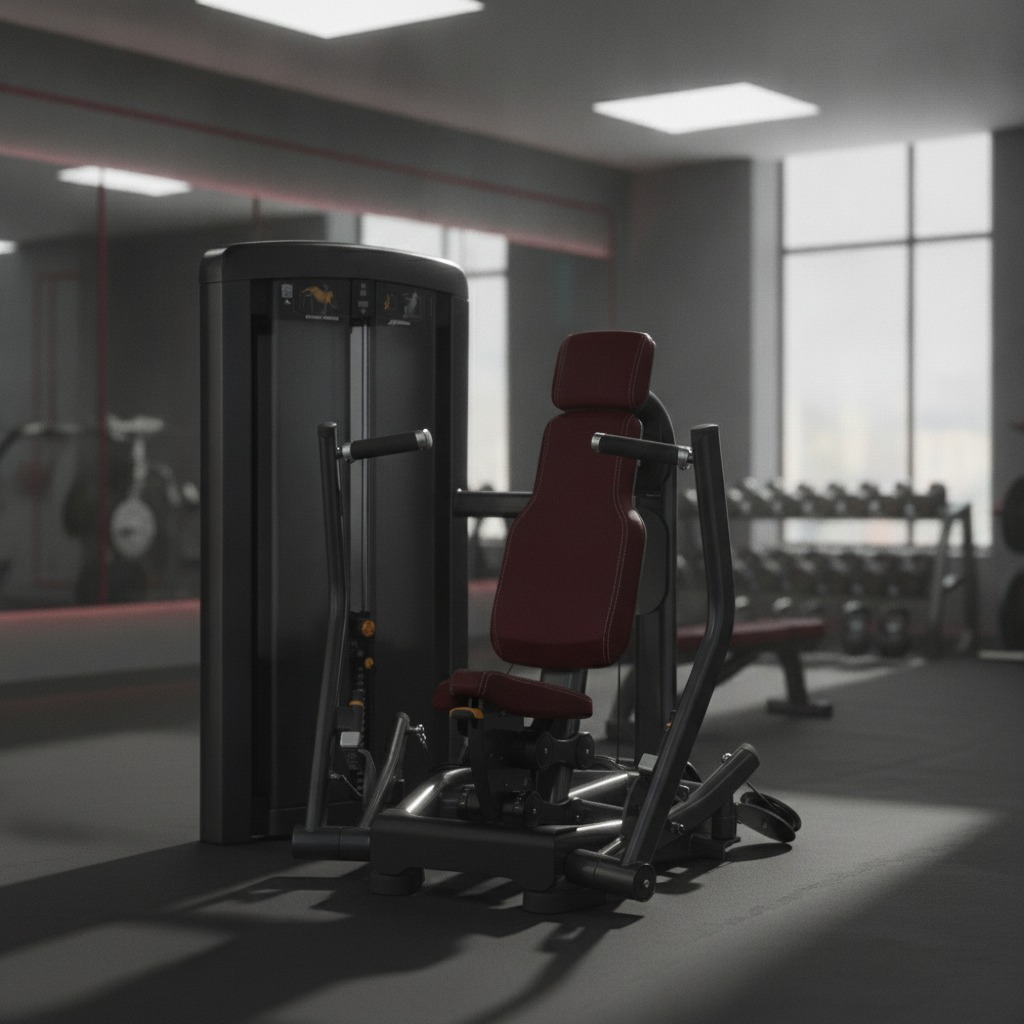
What buyers really mean when they ask for fitness equipment
When sourcing fitness equipment for a club, hotel, rehab room, or corporate gym, the real question is rarely just “what looks good on the floor?” Buyers usually need to know how a machine will hold up, how much supervision it needs, and whether it gives users a clear, controlled movement. A commercial chest press is a good example. It takes a familiar upper-body exercise and packages it into a guided station that is easier to standardize than free weights.
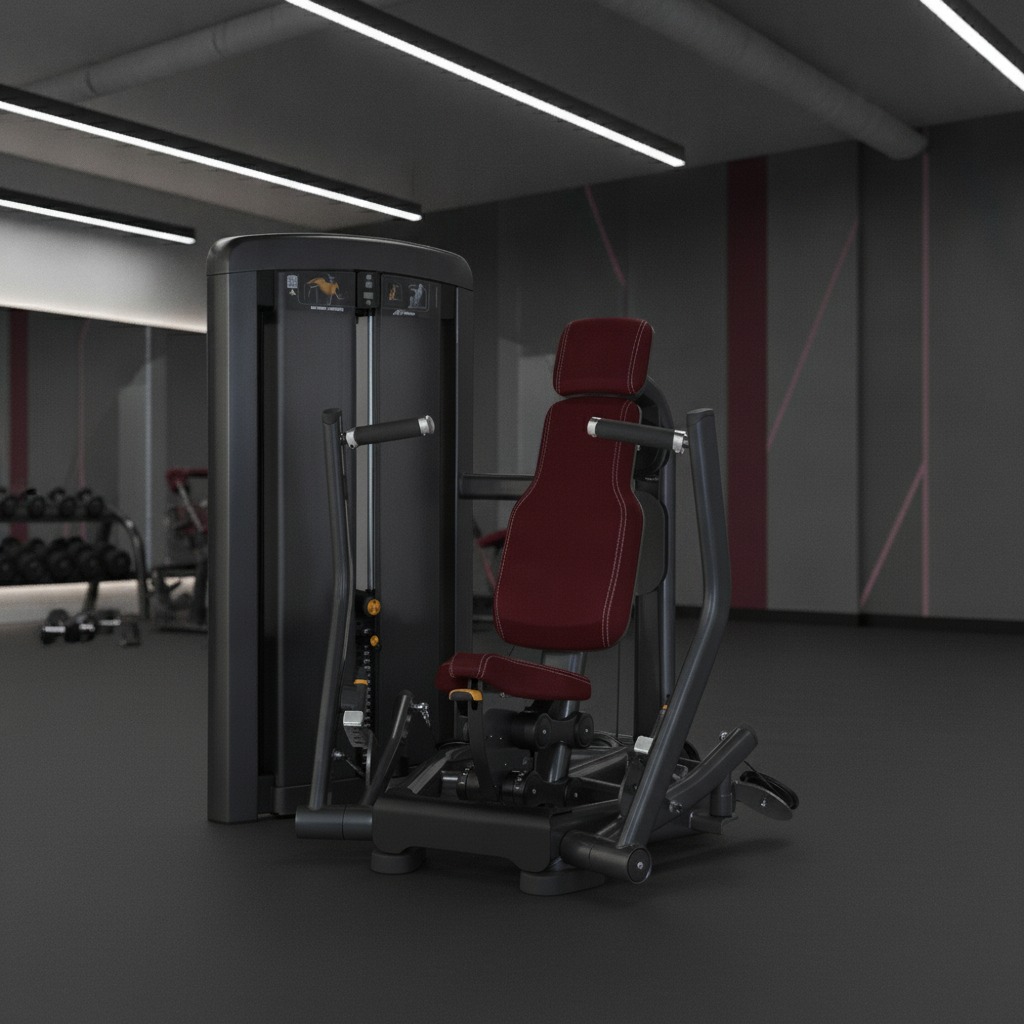
The machine in view appears to be a selectorized seated press unit, likely a chest press or pec press style machine. It has a full frame, an enclosed weight stack tower on one side, a seated station with a fixed back pad, and dual handles that move the pressing arms forward. For operators, that combination matters because it supports predictable use, easier coaching, and a smaller footprint than a room full of separate strength stations.
Why this type of machine stays on buying lists
Commercial fitness rooms are under pressure to do more with less space. That is where guided strength training equipment tends to earn its keep. A machine like this reduces the learning curve for new users, who often feel more comfortable sitting down, selecting a pin, and pressing forward than loading a barbell or setting up a bench station.
There is also a maintenance angle. Selectorized machines can be easier to supervise than open training zones, especially in hotels, apartment amenity rooms, and smaller business gyms where staff may not be watching every rep. That does not make them maintenance-free, of course. Upholstery wears, cables and linkages need inspection, and moving parts should not be left to grind quietly until a failure becomes obvious.
What the visible construction suggests
From the image, the machine looks like industrial gym equipment built around a welded steel frame with dark powder-coated surfaces and maroon upholstered pads. The stack tower is enclosed, which is common in commercial settings where safety and a cleaner appearance both matter. The pressing area includes a seat, backrest, and separate headrest, along with leverage arms and handle tubes finished with metal end caps.
That mix of materials is typical for durable cardio equipment and strength stations alike: metal for the structure, foam and vinyl-like upholstery for user contact, and molded shrouds or trim parts where guards and adjustments are needed. A buyer does not need every manufacturing detail to make a first pass, but it is useful to recognize which features usually signal a more serviceable commercial build rather than a light-duty home unit.
How to judge whether it fits your facility
1. Match the machine to the users
If your members are beginners, older adults, hotel guests, or rehabilitation patients, a seated press station is often easier to introduce than free-weight work. The supported back position and guided handles help users focus on movement rather than balance. In a strength training circuit, that can be a real advantage.
2. Check the floor plan, not just the brochure photo
One practical mistake is buying a machine for the exercise it offers and forgetting the service space around it. Even compact gym equipment needs room for entry, exit, stack access, and cleaning. If a machine is squeezed too tightly against a wall or another station, staff may avoid maintaining it properly.
3. Think about repeat use, not just first impressions
Commercial fitness equipment gets used by many body types and skill levels. Seat and pad comfort, handle placement, and the ease of changing resistance matter more after the hundredth user than they do on delivery day. A machine that feels “premium” for one strong athlete may still be awkward for a smaller user if the setup is not forgiving.
Common buyer mistakes
One frequent error is treating all strength-training equipment as interchangeable. A chest press, a lat pulldown, and a leg press may all look like large framed machines, but they serve different movement patterns, training goals, and traffic flows. Another mistake is overfocusing on cosmetics. Dark powder coat and stitched upholstery look good, but the real test is whether the adjustment points, stack selector, and moving arms feel smooth under regular use.
Buyers also sometimes underestimate the importance of staff training. Even simple gym equipment benefits from a one-page operating guide posted nearby. That is especially true in mixed-use facilities where users may not know the difference between a press machine and a fly-style motion.
A practical short list for sourcing teams
Before you specify a machine like this, ask for the basics that affect day-to-day operation: frame construction, stack-based or plate-based design, upholstery replacement options, service access, and how easy it is to adjust seat positions and resistance. If the supplier cannot speak clearly about those items, that is usually more informative than a polished brochure.
For hotels, corporate gyms, and rehab facilities, the best purchase is often the machine that is easiest to understand, easiest to keep clean, and least likely to become a bottleneck during busy hours. That is where a seated press station earns attention. It is not flashy, but it is the kind of commercial fitness equipment that gets used often when it is placed well.
FAQ
Is this better for beginners or experienced lifters?
Usually beginners and general users benefit most, though experienced lifters may still use it for accessory work and controlled volume.
Does a selectorized machine replace free weights?
No. It serves a different purpose: consistency, guidance, and lower skill demand. Most serious facilities need both.
Where does this machine make the most sense?
Commercial gyms, hotel fitness rooms, corporate wellness areas, and supervised training or rehabilitation spaces are the most natural fit.
If you are comparing models for a new floor plan, start with the movement you want to support, then verify service access, user comfort, and footprint. That order saves time later and avoids buying a machine that photographs well but fits poorly into the room.