
Why buyers keep coming back to selectorized strength machines
When people talk about fitness equipment, the conversation often starts with treadmills and dumbbells. But in commercial spaces, the workhorse pieces are usually the machines that let users train hard without a lot of setup. A selectorized upper-body station like the one described here does exactly that: it gives a gym operator a self-contained pulling platform, with a weight stack, cable routing, padded stabilization points, and a compact floor footprint.
That matters because buyers are rarely just buying steel and upholstery. They are buying throughput, ease of use, and a machine that can survive a long day of different users, different grip styles, and plenty of careless handling. In a hotel fitness room, apartment gym, rehab setting, or commercial training floor, the difference between a smart purchase and a regrettable one is often whether the equipment makes the workout obvious at first glance.
What this machine appears to do well
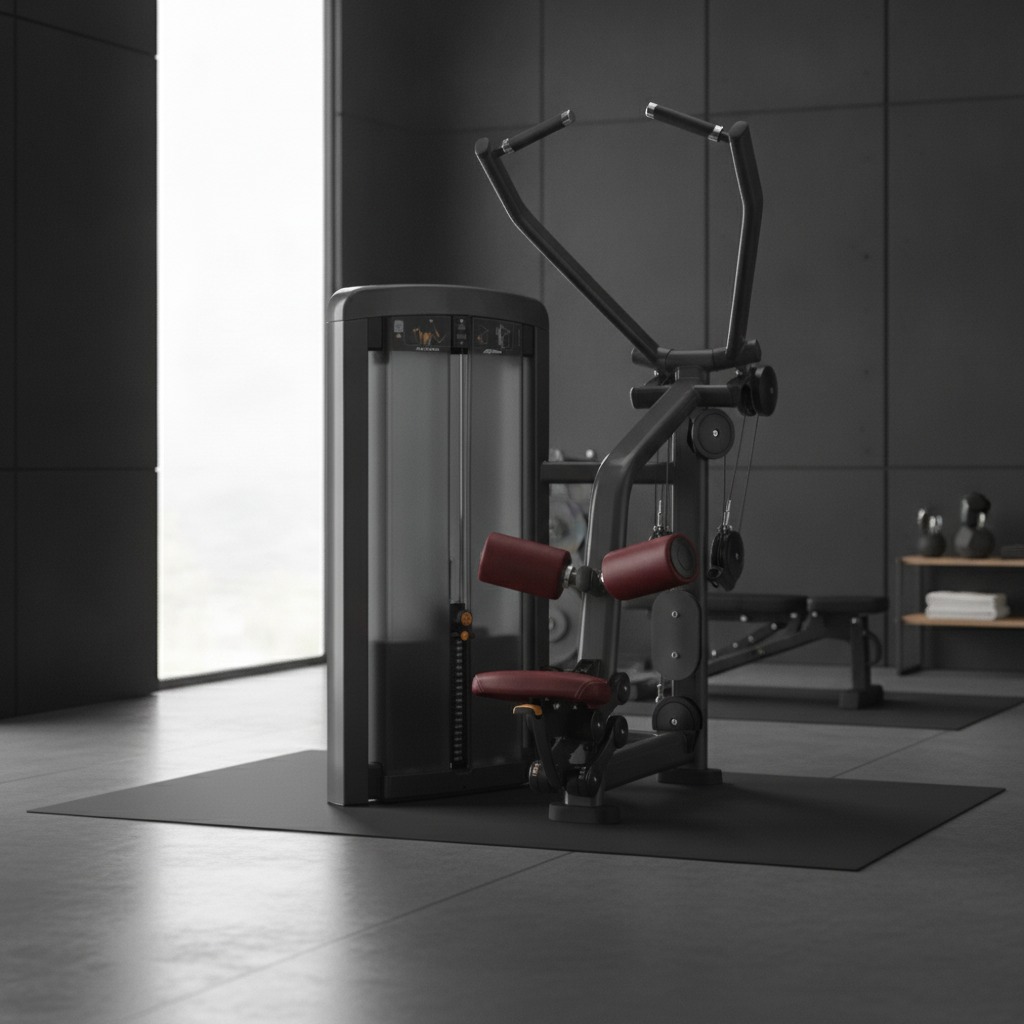
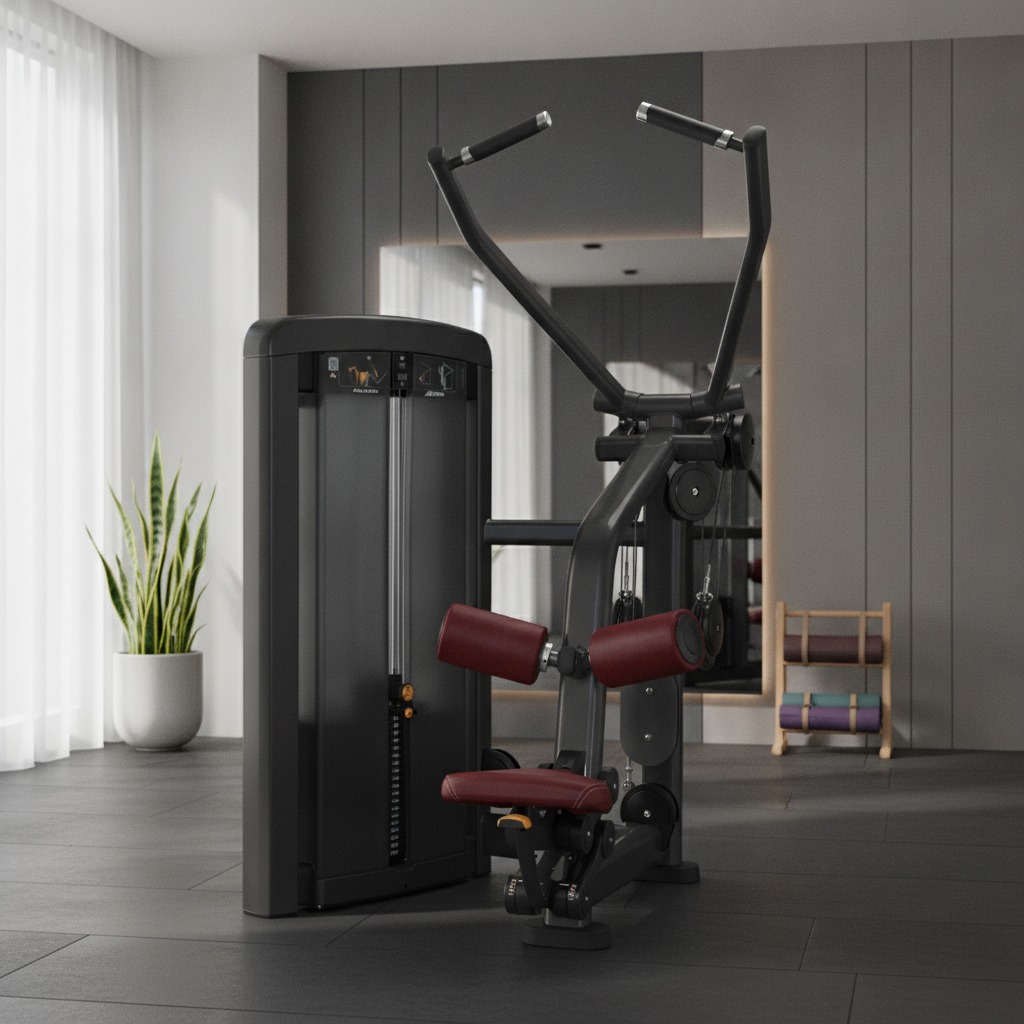
Based on the visible structure, this is a plate/stack-loaded strength training machine built around a vertical pulling movement, likely a lat pulldown station with a related row function or closely linked upper-body pull pattern. The padded thigh rollers are a practical clue: they help keep the user anchored when pulling down against resistance, which is especially useful when the load gets serious or when less experienced users are involved.
The enclosed weight stack on the left suggests selectorized operation, which is still the preferred format in many public facilities. Users can change resistance quickly with a pin, and staff can keep the machine tidy and predictable. The black powder-coated steel frame gives the unit the heavy-duty look buyers expect from commercial gym machines, while the red upholstery breaks up the visual mass and makes the station easier to spot on a busy floor.
Why selectorized format still wins in shared spaces
For operators, the appeal is straightforward: less friction, less lost time, fewer loose plates to manage. That does not make selectorized systems perfect, but it does make them easier to supervise. A machine that is easy to understand will get used more often, and in a revenue-generating or member-retention sense, that is not a small thing.
How the visible design supports real-world use
The cable-and-pulley layout is doing more work here than most casual buyers realize. Cables change the feel of the resistance path, and pulleys help route the load so the exercise can be smoother and more controlled than a pure free-weight movement. For back training, that consistency is valuable. It helps users focus on range of motion and posture rather than balancing a bar or managing awkward setup.
The dual overhead grips suggest different hand positions, which can slightly change the emphasis of the movement and improve comfort for a wider range of users. That is one of the reasons weight training equipment like this belongs in mixed-use facilities: the machine can serve more than one body type and more than one training preference, even if it is not especially adjustable in the way a cable tower might be.
A practical note: the more users a machine has to serve, the more important the contact points become. Seat padding, thigh rollers, handles, and selector pin access all affect how the machine feels after months of use. Those details are easy to ignore when a machine is new and shiny. They are much harder to ignore when maintenance staff are wiping down sweat three times a day.
What buyers should check before specifying a machine like this
If you are comparing fitness equipment for a commercial gym or a smaller institutional space, start with the basics that are visible and verify the rest with the supplier.
1) Footprint and circulation
This appears to be a floor-standing, compact unit, but compact is relative. Leave enough room for seated entry, cable movement, and a user loading or unloading the stack. Tight layouts create friction around the machine and can make a decent product feel awkward.
2) User range
Check whether the seat, thigh restraint, and grip positions suit your target population. A university gym and a rehab facility will not want the same ergonomics.
3) Maintenance access
Selectorized machines look simple from the outside, but cable wear, pulley condition, and upholstery stress still need attention. Ask how easy it is to inspect the stack, replace worn parts, and service the moving hardware.
4) Noise and feel
In shared environments, a machine that clatters or feels jerky gets complained about fast. Smooth cable movement is worth paying attention to, even if it is not the flashiest spec on the sheet.
Common buying mistake: judging by appearance alone
A polished frame and strong-looking upholstery do not tell the full story. The real question is whether the machine fits your use case. Some operators overbuy on visual presence and end up with a machine that is too niche, too large, or too demanding for the actual member base. Others underspec the product and find that daily use exposes weak hardware, uncomfortable pads, or a confusing setup.
That is why it helps to think of gym machines as part equipment, part workflow. The machine should support the training experience, but it should also support staff efficiency and floor planning. Those two things are often connected.
Who this type of fitness equipment suits best
This style of machine fits commercial gyms, hotel fitness rooms, apartment fitness centers, and training or rehab facilities that want a controlled pulling station without the complexity of a full cable system. It also makes sense for a serious home gym if the owner values simplicity and a dedicated machine over modular versatility.
For buyers comparing cardio equipment, weight training equipment, and multi-station layouts, the key is not which category sounds more complete. It is which piece will actually be used consistently by the people you serve. A well-placed lat pulldown or row station often earns more floor value than a larger piece that looks impressive but gets skipped.
Next step for sourcing teams
Before you place an order, confirm the exact configuration, loading system, dimensions, and service access points with the seller. The visible features here tell you a lot, but not enough to approve a final spec sheet. If you are building out a facility, ask for the machine’s full technical data and compare it against your layout, user mix, and maintenance plan. That is usually where the real decision gets made.