
Fitness Equipment Buying Trends Are Shifting Toward Smarter, Space-Saving Cardio
When buyers search for fitness equipment today, they are often not looking for a full commercial floor plan. They are trying to solve a narrower problem: how to specify durable indoor training gear that fits the room, the users, and the operating budget. That is especially true for treadmills, which remain one of the most visible pieces of cardio equipment in homes, hotels, rehab spaces, and smaller gyms.
The trend is not just “more exercise machines.” It is a move toward equipment that is easier to maintain, simpler to operate, and less demanding on floor space. For sourcing teams, that changes the decision-making process. A treadmill can look straightforward on a product page and still create headaches later if the frame is flimsy, the console is awkward, or the unit is not suited to the intended setting.
Why Treadmills Still Anchor the Cardio Conversation
Among indoor exercise categories, treadmills are still the benchmark product for walking and running training. They are familiar to users, easy to explain to guests or residents, and versatile enough to serve both light rehabilitation work and regular fitness routines. In many facilities, one treadmill will see more use than several specialty stations simply because people know how to step on and start walking.
The treadmill form is also relatively easy to recognize from a manufacturing standpoint: a walking belt, front motor housing, rear deck cover, uprights, handrails, and a console positioned for quick reading. That simplicity is useful, but it can hide the important differences. Buyers do not really need a generic “running machine”; they need a machine that matches duty cycle, noise expectations, service access, and user profile.
What the Visible Product Design Suggests
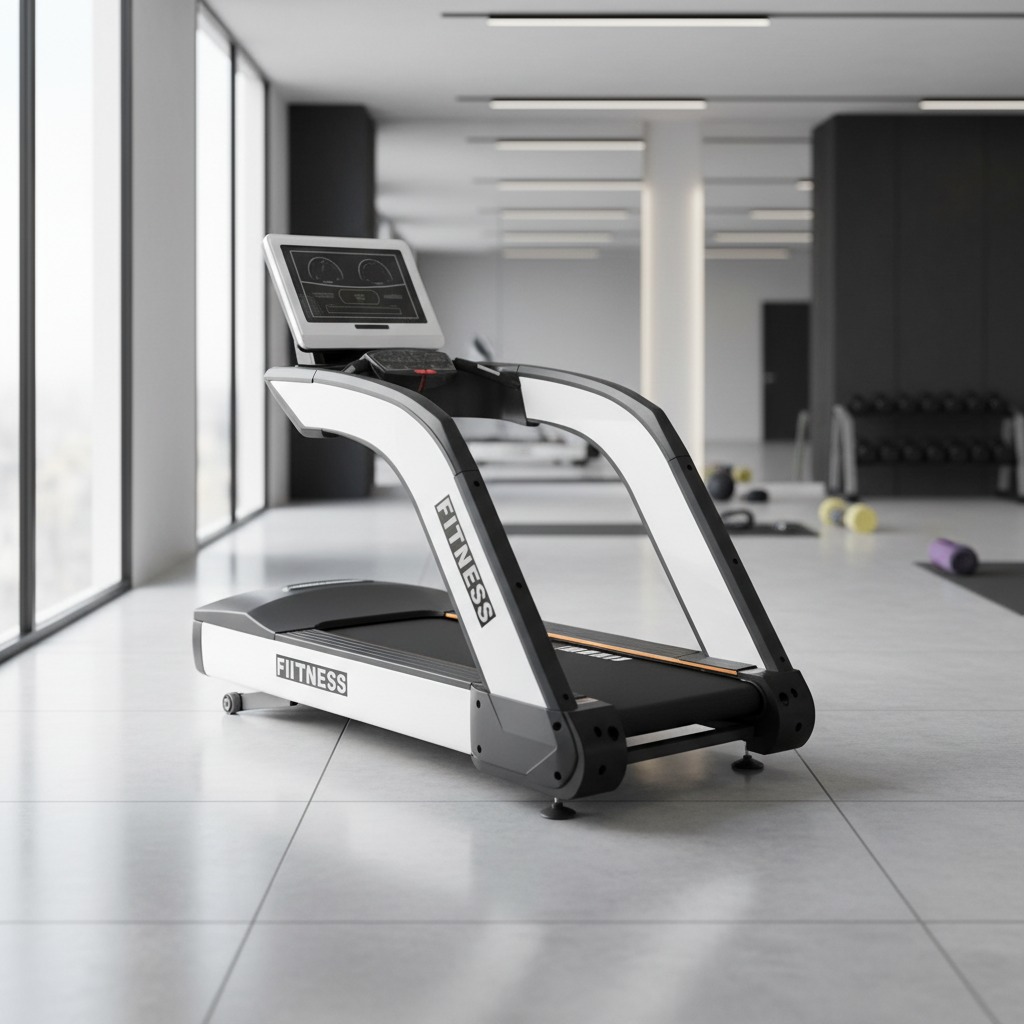
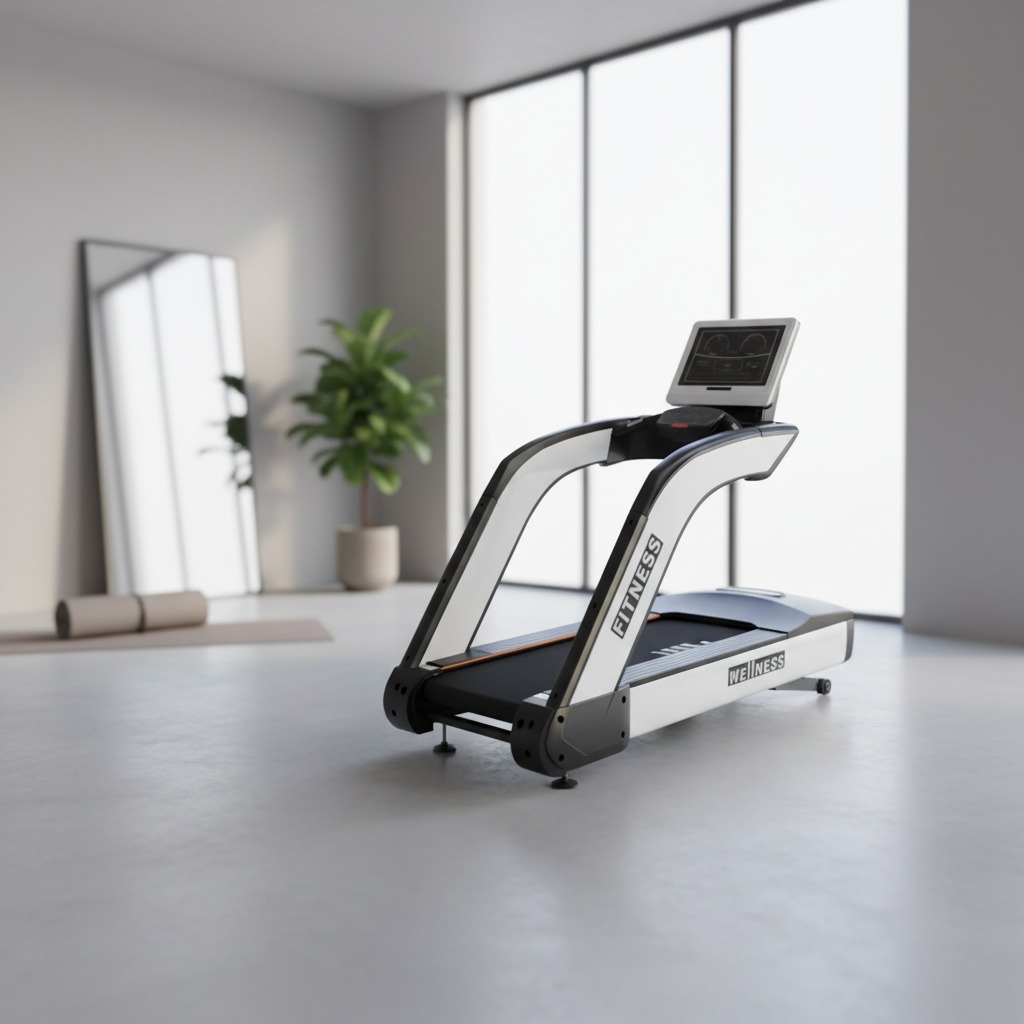
The product category shown is a single-person treadmill with a front-mounted console, curved side uprights, and a standard running deck. From a practical purchasing angle, that layout points to a familiar indoor cardio format rather than a niche device. The digital display and integrated control area are important because they reduce friction for the end user. If the interface is confusing, a treadmill becomes a good-looking object that is underused.
The visible construction also suggests a mix of molded paneling and metal framing, which is common in assembled electromechanical fitness equipment. That combination is worth noting because it affects both appearance and serviceability. Smooth exterior panels look cleaner in hospitality or wellness settings, but they also need to be designed so technicians can reach internal components without excessive disassembly. That is the kind of detail buyers sometimes overlook until the first service visit.
Trend Analysis: Where Buyer Expectations Are Moving
1. Simpler user experience
Facilities are favoring equipment with clear displays, fewer barriers to entry, and fast-start controls. This matters in mixed-user environments such as hotels and rehab centers, where not every user wants a learning curve before the first step.
2. Better fit for limited space
Space-efficient fitness equipment is gaining ground because real estate is expensive and underused corners are hard to justify. Buyers are looking closely at footprint, clearance, transport wheels, and whether a treadmill can be moved for cleaning or layout changes. Even when a unit is not folding, maneuverability still matters.
3. Balanced appearance and durability
There is steady demand for equipment that looks polished without being overly fragile. Black-and-white housings, compact consoles, and clean lines are common because they fit both home gyms and commercial interiors. The caution here is obvious: style should not outrun structure.
How to Evaluate Fitness Equipment Before You Buy
If you are comparing treadmills or related cardio equipment, start with the use case and work backward.
For a home gym, the main questions are noise, size, and everyday ease of use. For a hotel or wellness facility, the emphasis shifts toward guest friendliness and visual fit. For rehab settings, controlled walking speeds, stable handrails, and clear displays become more important than flashy extras. Commercial gyms often place the heaviest load on the machine, so frame strength, parts access, and long-term serviceability usually outweigh cosmetic details.
It also helps to compare the treadmill against other strength training equipment and cardio equipment in the room. If the space already has bikes or ellipticals, a treadmill should earn its place by serving a different workout pattern or a broader user group. Otherwise, you may just be duplicating function.
Common Mistakes Buyers Still Make
The most common mistake is overbuying features that look impressive but do not improve daily use. A large console is not always a better console. Extra training modes are not much help if the machine is difficult to maintain. Another frequent problem is underestimating service needs. In a fitness room, a machine that is easy to wipe down but hard to inspect can become expensive over time.
Buyers also sometimes treat all treadmills as interchangeable. They are not. The intended environment matters, as does the expected run time per day. A unit that works well in a home gym may be the wrong choice for a hotel with constant guest turnover.
Practical Buyer Questions to Ask Early
Before you issue an RFQ or short list a model, ask a few plain questions: Who will use it most? How much floor space is actually available? Will staff need to move it for cleaning? Is the console readable for beginners? How quickly can the unit be serviced if a panel or control fails?
Those questions sound basic, but they usually separate a good purchase from a troublesome one. And if the supplier cannot answer clearly, that is a warning sign in itself.
What This Means for Sourcing Teams
The broader trend in fitness equipment is toward practical, user-facing designs that fit more places and require less explanation. Treadmills remain central because they are familiar, versatile, and easy to specify at a high level. But the real buying decision lives in the details: frame layout, console readability, maintenance access, and whether the machine genuinely suits the setting.
If you are evaluating treadmill or cardio equipment options for a home gym, hospitality project, rehab room, or commercial floor, use the application first and the spec sheet second. That order saves time, and often money too.
Next Step for Buyers
Review your intended installation space, daily usage level, and maintenance expectations, then compare treadmill candidates against those realities rather than marketing language. If you are sourcing fitness equipment for multiple environments, build a short checklist for each one. The right machine is usually the one that disappears into the routine and keeps working.