
Why an adjustable bench still matters in modern fitness equipment planning
When buyers compare fitness equipment for a home gym, training studio, or commercial floor, the adjustable bench is easy to underestimate. It does not draw attention the way a large machine does, and it will never look as dramatic as a full cardio line. Still, it often ends up being one of the most-used pieces in the room. For engineers, sourcing managers, and product teams, that makes it worth a closer look.
An adjustable bench turns a small footprint into a wide range of strength work. Instead of buying a bench fixed to one angle, operators get a flat-to-incline platform that supports dumbbell pressing, shoulder press work, rows, core-supported movements, and other upper-body training patterns. In practical terms, that means more exercise variety without multiplying the number of stations. For facilities with limited square footage, that matters more than people admit at first.
What the bench design tells you at a glance
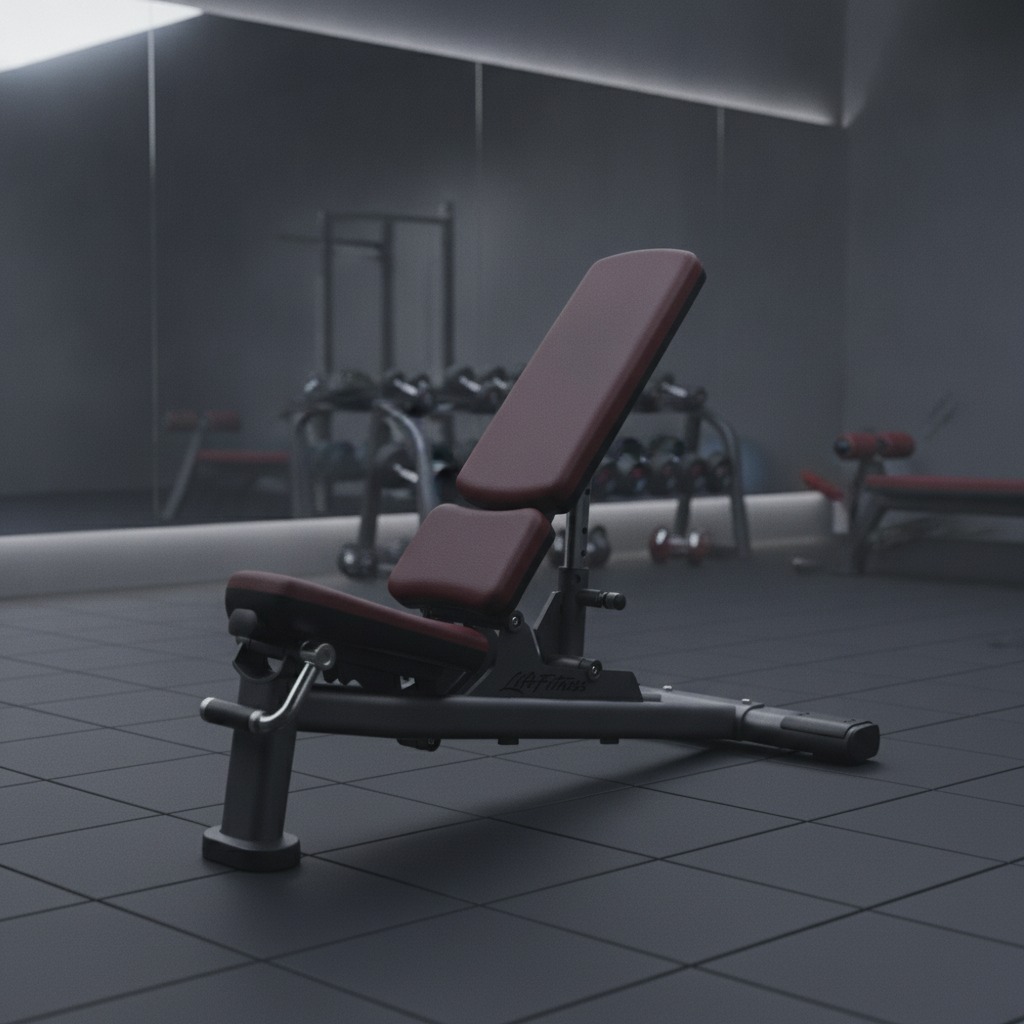
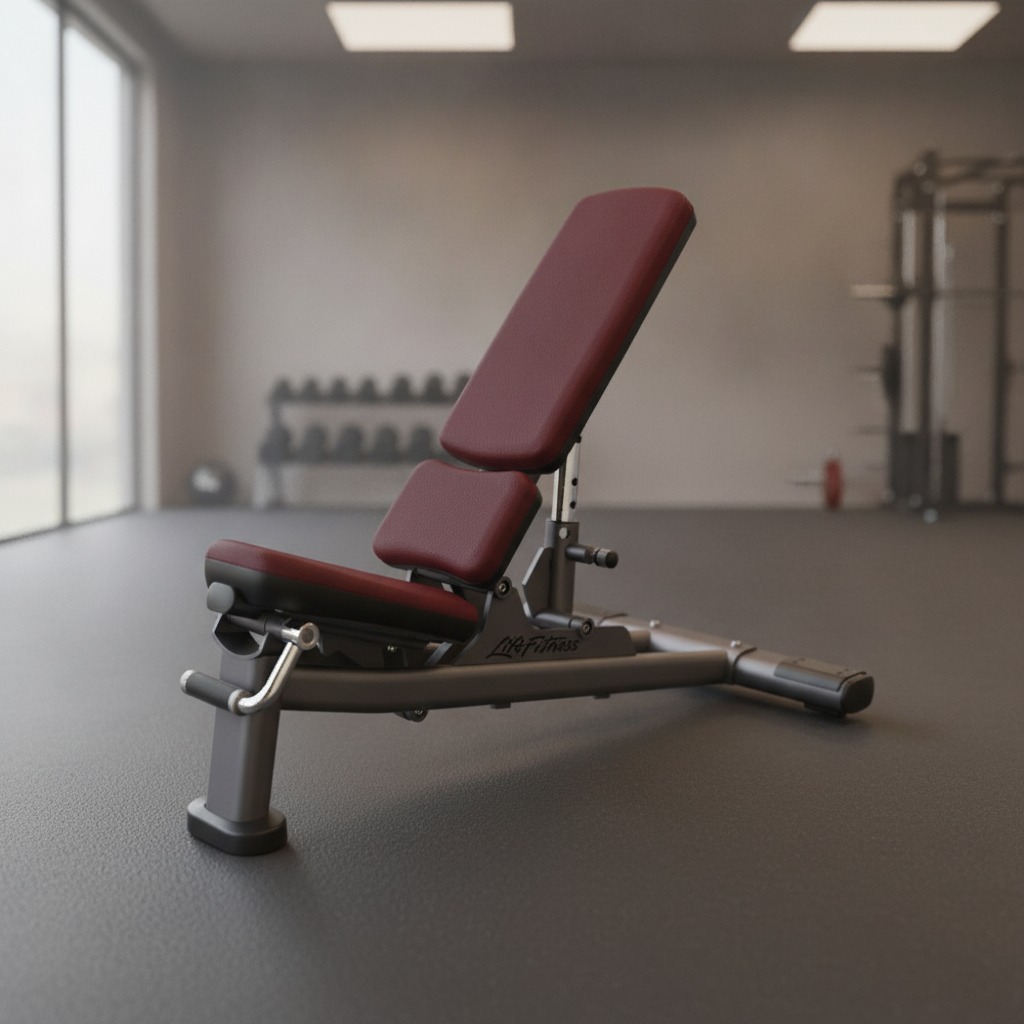
The product structure described here is straightforward and familiar: a padded backrest, a separate padded seat, a steel frame, a base support leg, an adjustment ladder or selector, locking pins or knobs, and stabilizing feet at the front and rear. That combination points to a bench intended for controlled angle changes rather than quick, casual folding.
The visible upholstery appears to be dark red vinyl or synthetic leather over foam padding, with a powder-coated steel frame in dark gray or black. Silver hardware and adjustment posts are exposed. None of that is unusual, but it does suggest a product built for routine handling rather than decoration. For procurement teams, that is useful. A bench like this is judged less by appearance than by how well it holds alignment after repeated use.
Why the separate seat pad matters
A separate seat pad is not just a comfort detail. On incline work, it helps keep the lifter positioned correctly as the backrest angle changes. That can improve pressing stability and reduce sliding, especially during shoulder press or incline dumbbell work. It is a small feature, but a meaningful one. In training environments, small stability gains often become the difference between a bench people trust and a bench they avoid.
How this type of gym equipment fits different facilities
For a home gym, this style of bench offers a strong return on space. One well-made bench can support a large share of dumbbell training and body-positioned movements. For a commercial fitness facility, the value is different: durability, serviceability, and ease of daily adjustment matter more than novelty.
In physical training spaces, especially where upper-body strength work is part of broader conditioning, the bench serves as a flexible base. It pairs naturally with dumbbells and, depending on the surrounding layout, may work as part of a rack-free strength zone. That said, buyers should avoid assuming compatibility with every rack system or accessory setup. If rack integration matters, confirm the dimensions and interfaces instead of guessing from the photo.
Selection criteria buyers should not skip
When evaluating this category of strength training equipment, the main questions are not glamorous, but they are the ones that save trouble later.
Angle adjustment should feel secure and repeatable. A bench with loose indexing is annoying on day one and a liability later.
The base geometry should provide stable floor contact. Wide feet and a balanced support leg reduce wobble during pressing and seated lifts.
Padding should be firm enough for support, not so soft that the lifter sinks and loses position.
The finish on the steel frame should withstand frequent handling, sweat exposure, and cleaning agents.
If the bench will be moved often, ask about transport features, but do not assume they exist. The available information does not confirm wheels or handles, and it is better to check than to discover the omission after delivery.
Common buying mistakes with adjustable benches
One mistake is treating all benches as interchangeable. They are not. A bench that looks acceptable in a static photo may feel unstable under load if the locking system is weak or the feet are too narrow.
Another is overbuying features that sound premium but do not match the use case. A commercial gym may need faster adjustment and tougher upholstery; a home gym may need compact storage and enough versatility to replace several fixed pieces. The right choice depends on the training program, not on marketing language.
A final caution: do not ask a supplier to confirm a load rating, exact dimensions, or compatibility details unless those values are provided. For this product, those specifics are not verified here, and in purchasing work, invented certainty causes more damage than a careful pause.
Why this product category remains a steady favorite
There is a reason adjustable benches have stayed relevant while other categories of gym equipment become more specialized. They solve a plain problem elegantly: how to support strong, repeatable lifting without eating up too much space or forcing one movement pattern on the user. That kind of utility is not flashy, but it is durable.
If your team is building out a strength zone, this bench belongs early in the conversation. It anchors the floor plan, supports a wide mix of lifts, and gives trainers and end users a stable platform that does not need much explanation. Good equipment disappears into the workout, and that is often the best sign.
Next step for buyers and product teams
Use this bench as a reference point when comparing cardio equipment and other training stations for overall facility mix. Ask whether your floor plan needs another specialized machine, or whether a versatile bench will do more work for less space. If you are sourcing similar strength training equipment, confirm the adjustment mechanism, structural finish, upholstery durability, and floor stability before moving forward. That is usually where the real difference shows up, long after the catalog photo is forgotten.