
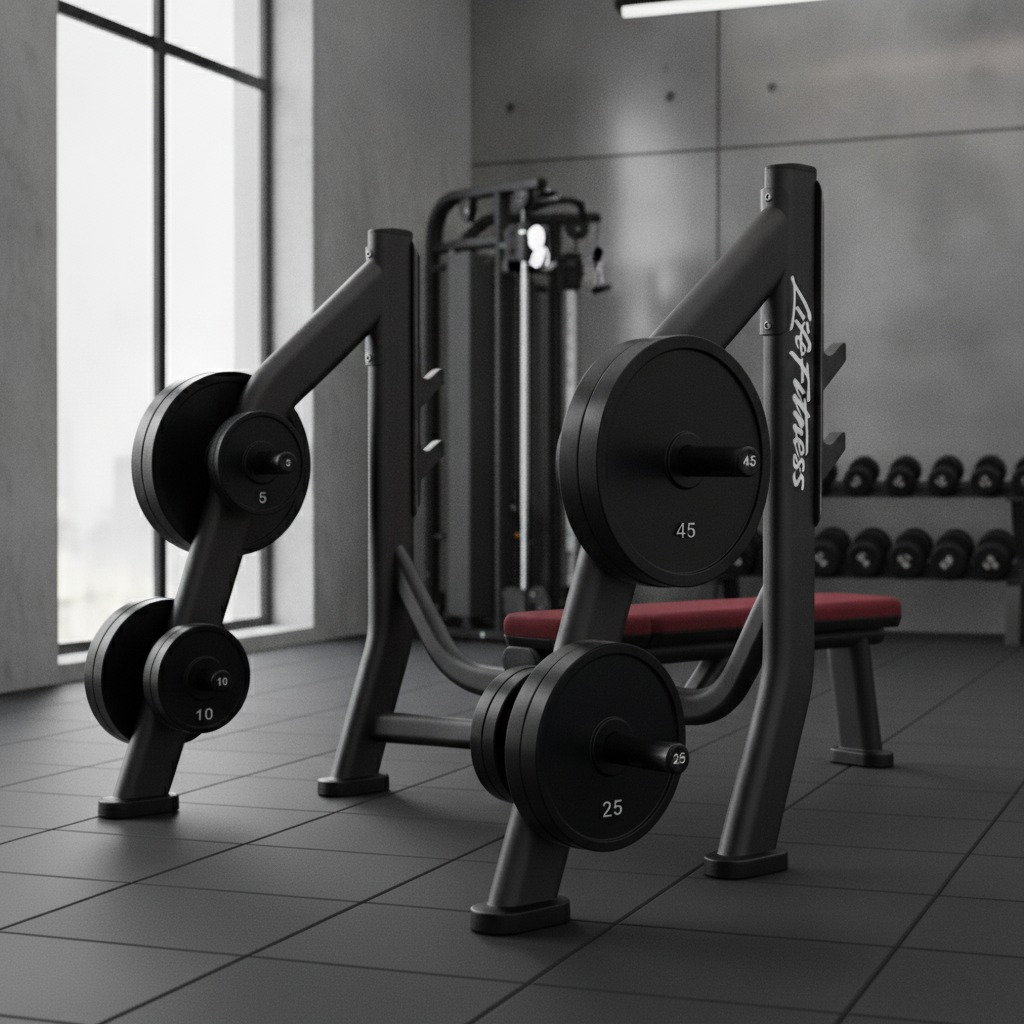
Fitness Equipment That Pulls Double Duty: Training Surface and Plate Storage
When buyers compare fitness equipment for a commercial gym or training room, the obvious question is usually about the press itself. Less obvious, but often more important on a busy floor, is how much space the machine saves and how cleanly it fits into the rest of the room. A plate-loaded bench press or press station with integrated storage does both jobs at once: it supports upper-body pressing work and keeps weight plates close at hand instead of scattered across the aisle.
That matters for operators, coaches, and sourcing teams alike. A compact machine can improve traffic flow, reduce clutter, and make the lifting area feel more organized without adding separate storage racks. The tradeoff is that these units need to be judged on more than appearance. Frame stability, plate horn layout, pad comfort, and floor footprint all affect how useful the machine will be once it is installed.
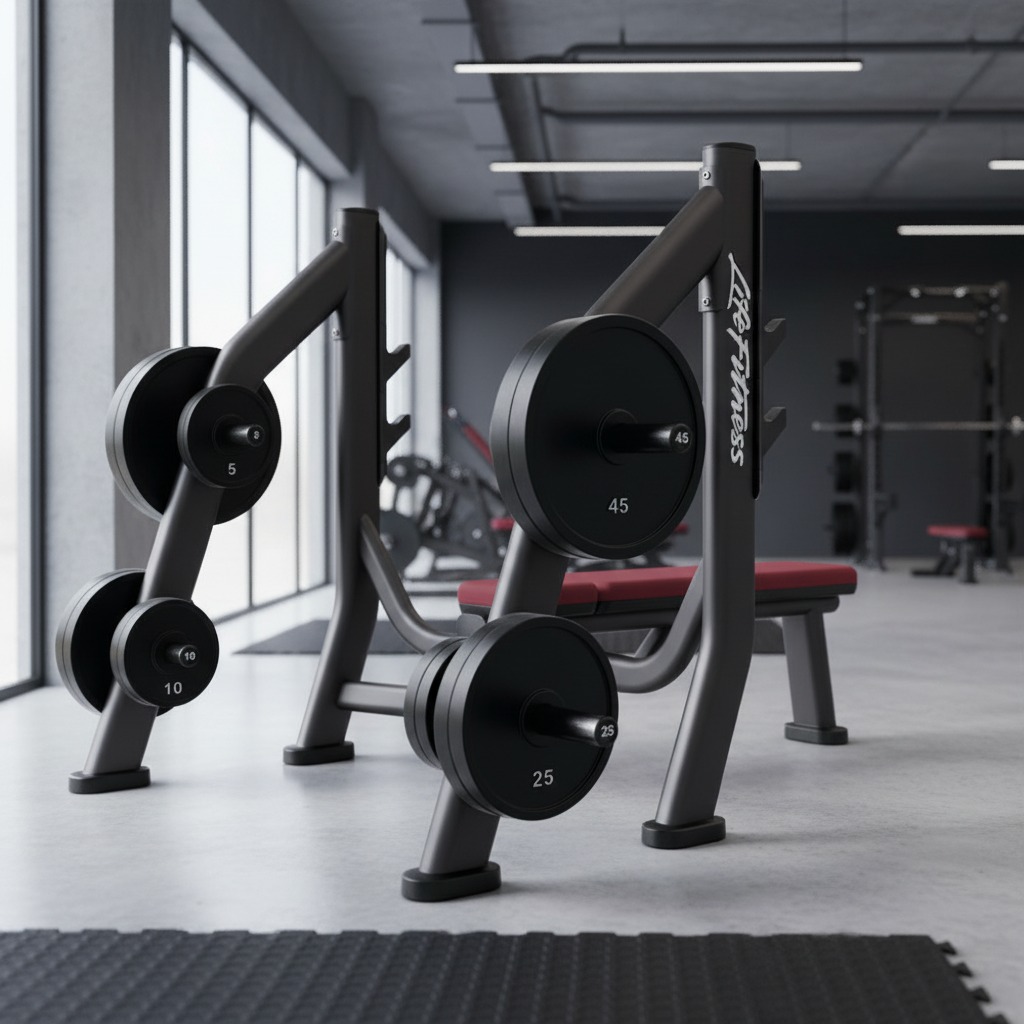
What the design tells a buyer
The type shown here appears to be a fabricated steel strength machine with a dark matte-coated frame, welded tubular construction, and a red upholstered bench pad. The layout suggests a bench-press or incline-press style station with side-mounted plate storage pegs. Multiple angled horns hold round plates, including visible examples in 5, 10, 25, and 45 lb sizes. That is not a small detail; integrated storage changes how a room functions day to day.
For a commercial buyer, the practical question is whether the unit is intended to be a true training anchor or just a space-saving accessory. In most gyms, the best version of this category does both. It gives the user a stable pressing position and gives the operator a place to stage plates within a short reach. That said, a storage-heavy frame is only useful if the loading points are easy to access and do not interfere with the lifter’s movement path.
Why integrated storage matters in a strength area
Separate plate trees and benches can work fine, but they also consume floor area and create extra walking steps. In a crowded room, those extra steps become clutter. Integrated gym accessories like this reduce friction: the athlete loads plates nearby, the staff has fewer loose discs to manage, and the room looks more deliberate. For facilities that want a clean presentation, that is worth real money, even if it is not always reflected in a spec sheet.
There is also a safety angle. Plates left on the floor are tripping hazards. A machine that keeps them on dedicated pegs can make the area easier to supervise. Still, buyers should not assume that “organized” means “maintenance-free.” Plate horns need to be positioned so the machine remains balanced, and the floor-contact feet should sit flat and stable on the actual gym surface, not just in a rendering.
Quick buyer checklist for this category
1. Confirm the press style
Based on the visible structure, this looks like a bench or press station, but the exact motion path is not confirmed. Before purchasing, ask whether it is flat, incline, decline, or a more specialized press setup. That detail changes both training use and programming value.
2. Check plate compatibility
The storage horns appear designed for standard round weight plates, likely the kind used in plate-loaded strength training equipment. If your facility uses bumper plates, calibrated plates, or mixed formats, confirm horn length and spacing before you order.
3. Look at the footprint, not just the photo
A compact integrated unit can still feel large once plates are loaded and a user is seated. Make sure there is enough clearance for approach, loading, and any spotter movement. This is one of those details that gets missed until installation day.
4. Inspect the finish and upholstery details
A matte-coated steel frame is generally a practical choice for commercial use, but finish quality matters more than color. The same goes for the pad: the bench surface should be firm enough for pressing work and resilient enough for repeated use.
Fabrication and build considerations
From a manufacturing standpoint, this category usually relies on tube cutting, bending, welding, surface coating, and pad assembly. Buyers do not need every internal process listed on a sales page, but they should care whether the frame looks cleanly fabricated and whether the joints appear consistent. Rough welds, poor alignment, and sloppy peg spacing can make a machine frustrating long before it ever fails structurally.
One practical caution: do not overbuy on visual bulk alone. A heavier-looking frame may feel reassuring, but the actual value comes from how well the machine supports repetition, loading, and room organization. In a training facility, those are the points that affect daily use, not the brochure language.
Who this kind of machine suits best
This style of fitness equipment fits commercial gyms, performance centers, and strength rooms that want fewer loose items on the floor. It is especially useful where bench pressing is a repeated traffic point and where plate storage is often a bottleneck. For smaller studios, the integrated design can be appealing if every square meter has to earn its keep. For larger gyms, it can be one part of a broader layout that separates lifting zones more cleanly.
If you are comparing options, the decision usually comes down to whether you want a simple press station with added storage or a more specialized machine with a defined movement path. The first is easier to slot into mixed-use spaces. The second may offer a more controlled training feel. Either way, the best choice is the one that fits your programming and your floor plan, not just the one that looks strongest in a product image.
Practical next step for buyers
Before placing an order, ask for the exact machine type, dimensional drawing, plate compatibility details, and a clear list of what is included. If your team is standardizing gym accessories and strength stations across multiple locations, that documentation is more valuable than a polished photo. It helps you compare apples to apples and avoid the expensive mistake of installing equipment that does not match your training floor.
If you are sourcing for a gym buildout or equipment refresh, use this kind of integrated press station as a reference point: it should support the lift, store the load, and keep the room workable. Anything less is just occupying floor space.