
Why fitness equipment buyers keep running into the same ventilation problem
buyers usually focus on frames, upholstery, weld quality, and how a rack or machine looks on a showroom floor. That makes sense. But the room the equipment lives in matters just as much. Heavy training spaces fill up quickly with heat, humidity, and stale air, especially when squat racks, power cages, and pull-up bars are packed into a dense layout. If the ventilation is weak, the customer notices it before they notice the finish on the steel.
That is where industrial air movement comes into the picture. A portable high-velocity blower or drying fan is not glamorous, but it solves a very real operational problem: moving large volumes of air where fixed HVAC alone may not be enough. For gyms, training studios, warehouse fitness zones, and commercial cleanup areas, the question is often not whether air movement is needed. It is how much, where, and how quickly it can be deployed.
What this type of fan is built to do
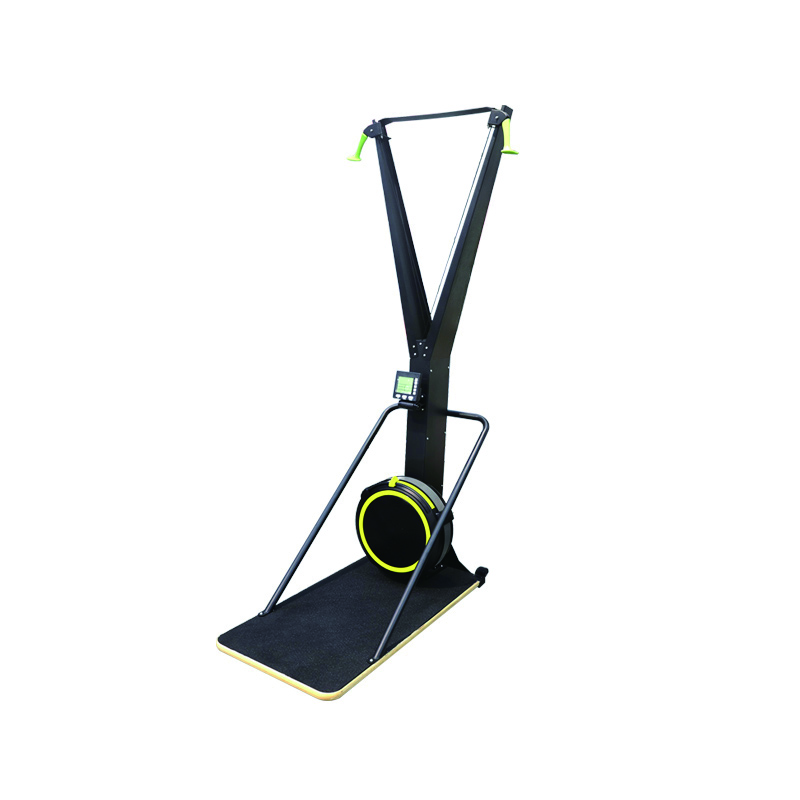
The product described here sits in the industrial air mover category. In plain terms, it is a floor-standing ventilation fan designed for ventilation, drying, cooling, or general air circulation in commercial spaces. The visible layout suggests a compact footprint with a tall central support column, a black cylindrical fan housing, a guarded intake, and a stable rectangular base. The upper structure appears to use a triangular frame with side rails and small yellow adjustment handles or knobs.
That arrangement tells a buyer a few useful things. First, it is meant to be portable. Second, it is built for use on the floor rather than mounted permanently. Third, the guarded fan opening and enclosed housing point to a design that tries to balance airflow with basic user protection, which matters in busy work areas where carts, boxes, or people can get too close.
Where fitness facilities can actually use industrial air movers
Most readers hear “industrial fan” and picture a construction site, but the use cases are broader. In a fitness environment, these units can help with:
Venue cooling during peak traffic periods
Floor drying after mopping or spill cleanup
Ventilation in garage gyms or training annexes
Air circulation near dense strength-training zones
Temporary drying support after deep cleaning or sanitation work
That last point is easy to overlook. Wet floors and lingering moisture are not just housekeeping problems; they can slow reopening, create slip risk, and make a facility feel poorly maintained. A portable blower gives managers a fast-response tool, especially when the building’s permanent airflow is not enough to handle the day’s load.
Quick buyer takeaway: what matters more than raw size
For a sourcing manager or facilities buyer, the decision should not start with fan diameter alone. A more practical filter is this:
How easy is it to move and position?
Does the base look stable enough for daily use?
Is the intake guarded well enough for crowded spaces?
Will the footprint fit between racks, storage carts, or cleaning equipment?
Can it be deployed without a complicated install?
The visible design here answers some of those questions favorably. The narrow vertical form helps conserve floor space, which is useful in compact training areas. The powered base and framed support suggest a unit intended for repeated repositioning. That said, the buyer still needs to confirm the missing specifications before committing: airflow capacity, voltage, noise level, speed settings, and motor details. Those are not visible and should not be assumed from appearance alone.
Selection criteria for gyms and commercial facilities
When comparing fitness equipment support products like ventilation fans, buyers should think about the layout as much as the machine itself. A large fan can be technically impressive and still awkward if it blocks a walkway or sits too close to a bench area.
A practical review usually comes down to three points.
First, portability. If staff need to move the unit between rooms, the frame should be easy to handle without feeling flimsy.
Second, durability. A metal frame with a dark painted or powder-coated finish is a reasonable sign of commercial intent, though finish quality should still be checked in person.
Third, safety. Protective grilles and guarded components are not optional in public or semi-public spaces.
A caution worth repeating
Do not buy a ventilation unit only because it looks “industrial.” Some products are built for short-term drying work, others for constant air circulation, and those are not always interchangeable. A fan that performs well in a cleanup bay may be too loud or too aggressive for a training floor, even if the footprint looks ideal.
Common mistakes buyers make
One common mistake is underestimating placement. A fan pointed straight at a rack bay can create an annoying draft for lifters and coaches. Another is overlooking storage. Portable units still need a home when not in use, and that home should not be the middle of a walkway.
A third mistake is treating ventilation as an afterthought during the purchase of squat racks, power cages, or pull-up bars. Those products may define the strength floor, but comfort and usability define how long customers actually stay in the space.
What to ask before ordering
Before a buyer places an order, it helps to request the missing technical data and confirm how the unit will be used day to day. Ask whether the fan is intended primarily for drying, cooling, or broad circulation. Ask how it will be powered and whether the installation environment has the right electrical support. Ask how the unit is cleaned, moved, and stored.
If the application is a gym or training facility, also ask where it will sit relative to the main workout zones. A fan that works beautifully in a warehouse may need a different placement strategy in a fitness room with customers moving between stations.
Practical next step
If your project combines fitness equipment with a busy commercial or training environment, treat ventilation as part of the purchase plan, not a separate cleanup concern. A portable industrial blower can be a small addition with outsized impact when the room gets hot, damp, or crowded.
For procurement teams, the next step is simple: match the fan’s visible form factor to the floor plan, then verify the hidden specs before buying. That is usually the difference between a useful support product and one more piece of equipment gathering dust in the corner.