
Why buying fitness equipment is not the same as buying a machine
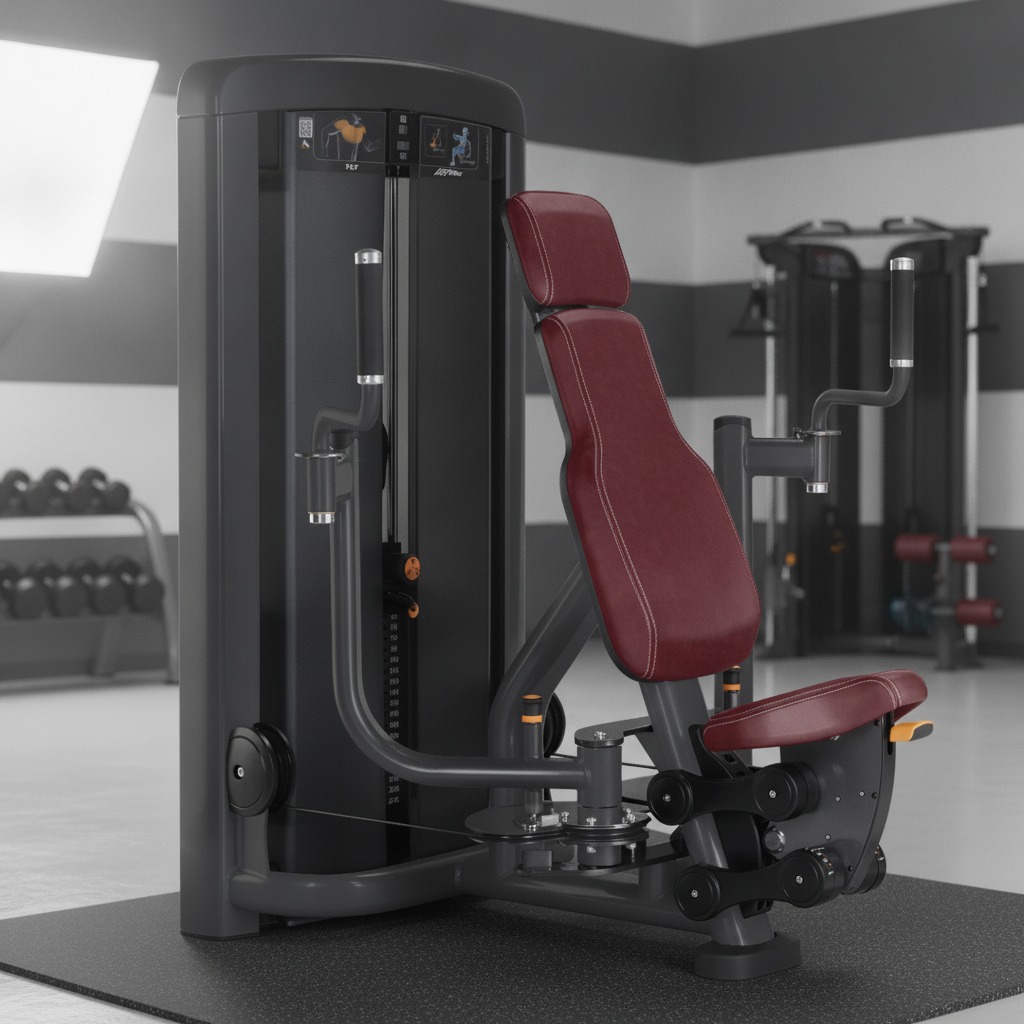
Choosing fitness equipment for a gym, hotel, rehab space, or training studio is less about visual appeal than about how the machine will behave after thousands of reps. The product in view here is a commercial seated press machine, likely a chest press or converging press style unit, and it shows why buyers need to look beyond the obvious. A compact frame, supported seating, and an integrated weight stack can make a lot of business sense, but only if the machine fits the user profile, floor plan, and training purpose.
That is the real decision most buyers are trying to make. Not “Do I want a press machine?” but “Will this press machine earn its footprint, stay usable for different body types, and hold up in daily traffic?”
What stands out in this machine
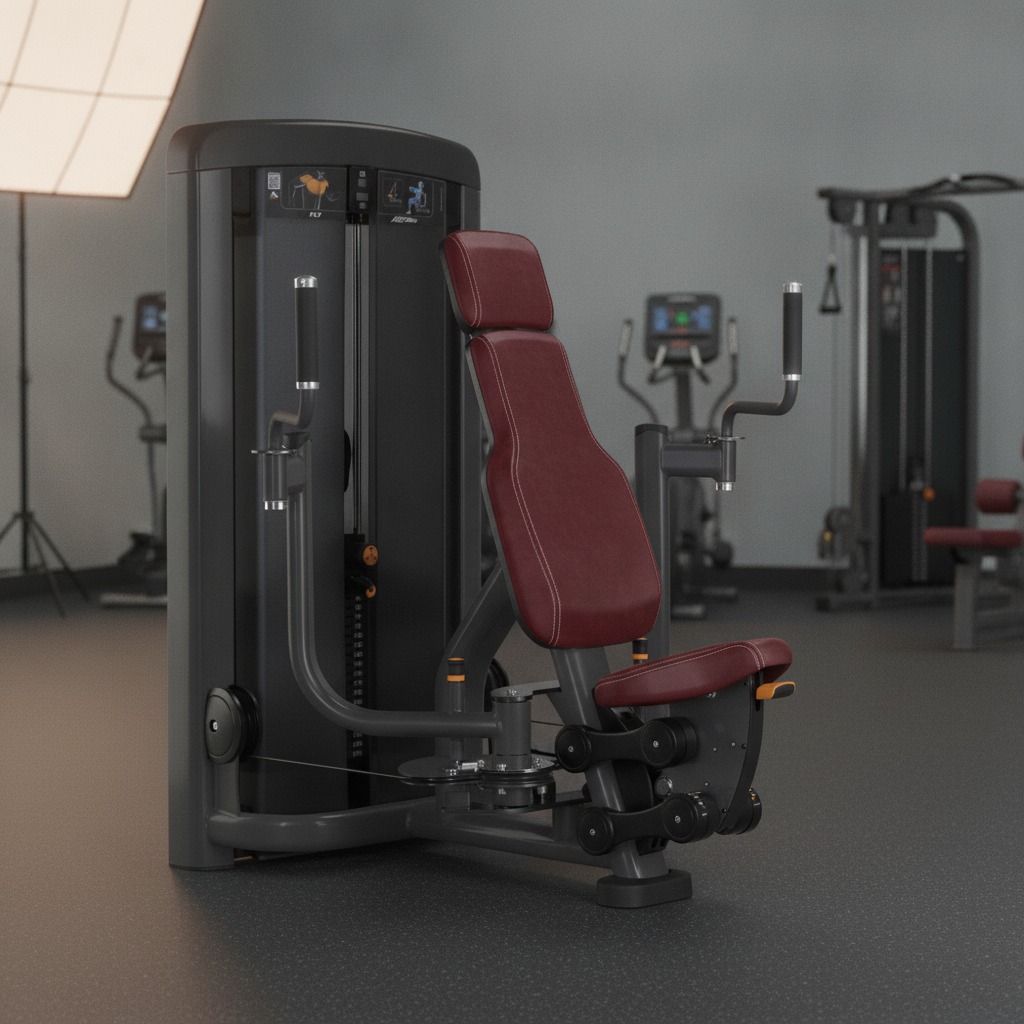
From the visible build, the machine appears designed for commercial use rather than light home duty. The matte black steel frame suggests welded fabrication and a powder-coated finish, which is the standard expectation in this category. The burgundy upholstery gives the unit a more finished look, but that is not just cosmetic. In a commercial setting, seat shape, back support, and the durability of stitched vinyl or synthetic leather matter because the machine is touched, shifted, and sweat-tested all day.
A few details are worth noting:
The tall weight stack housing points to an integrated resistance system, which makes the machine easier to manage in a shared facility. Users do not need loose plates scattered around the floor, and staff can supervise the station more easily.
The dual independent lever arms and visible adjustment points suggest the machine is intended to support a guided pressing motion with some degree of positioning flexibility. That can be helpful for chest, shoulder, and triceps work, especially where controlled movement is preferred.
The supported seated position is another practical feature. For many facilities, that means safer onboarding for beginners, better access for deconditioned users, and a more predictable training experience than a free-weight bench setup.
Where this type of equipment fits best
A machine like this is usually a stronger fit for commercial gyms, rehab and physio facilities, hotel gyms, and training studios than for a space built around open free weights. It offers a compact footprint relative to full multi-station layouts, which matters when square footage is expensive.
It also suits users who want pressing work without managing a barbell path or spotter. That can be useful in mixed-use facilities where not every member is confident under a bar, and it can keep training volume moving during busy hours.
Compared with a treadmill or elliptical trainer
Buyers sometimes lump all major floor equipment together, but the use case is different. A treadmill or elliptical trainer is usually selected for cardiovascular volume and user turnover. This press machine is about strength training and targeted upper-body work. If your facility already has enough cardio equipment, adding another press station may do more for member satisfaction than buying yet another treadmill.
That said, if the space is limited, the decision should still be made with traffic patterns in mind. A large run of cardio equipment can look impressive, but strength stations often create better retention in serious training environments.
Selection criteria that actually matter
Buyers should focus on a few practical points before committing to any commercial fitness equipment purchase.
First, check how easy the machine is to enter, adjust, and exit. A press machine that looks compact can still feel awkward if the seat position or handle path is poorly arranged.
Second, inspect upholstery and pad shape. Contoured padding is good, but only if it supports repeated use without creating pressure points.
Third, ask how much maintenance the moving parts will need. Pivot arms, linkage joints, pulleys, and cam housings are not liabilities by themselves, but they do signal a machine that should be chosen with serviceability in mind.
Fourth, think about your user base. A hotel gym may value simplicity and a smaller footprint. A strength-focused studio may care more about handle feel, movement smoothness, and how naturally the arms travel.
Common mistakes buyers make
One common mistake is overestimating how much space “compact” really saves. A machine may have a smaller footprint than a full commercial setup, but you still need room for access, adjustment, and user movement.
Another mistake is buying on appearance alone. Burgundy pads and a black frame look professional, but what matters is whether the machine supports repeated use without wobble, awkward positioning, or difficult maintenance.
There is also a tendency to overlook the target audience. A rehab facility and a performance gym may both want a press machine, but they will not use it the same way. One may prioritize support and ease of entry; the other may want a more demanding resistance feel.
Practical buyer advice
If you are comparing this kind of machine against other fitness equipment, make a short checklist before requesting a quote or site visit:
Does the station match your current mix of cardio equipment and strength stations?
Will the supported seated position suit beginners as well as stronger members?
Is the frame and upholstery built for high-traffic commercial use?
Can staff maintain the moving components without disrupting the floor?
If the answer is yes to most of those questions, the machine is probably doing real work for your facility rather than just filling a corner.
Final note for sourcing teams
This is the sort of machine that often gets judged too quickly. On paper, it is “just a press.” In practice, it can be one of the more useful pieces in a commercial lineup because it bridges accessibility and serious strength training. If you are sourcing fitness equipment for a facility with mixed users, the smart move is to evaluate the press station alongside your treadmill and elliptical trainer mix, not after the fact.
If you need to shortlist commercial strength machines, ask for full specifications, adjustment details, and maintenance guidance before you commit. A good floor plan hides a lot of sins; a bad one exposes them every day.